

Enhanced Curriculum Support
This is a comprehensive educational resource designed to provide students with the tools and guidance necessary to excel. This support system is structured to cater to various aspects of learning, ensuring that students are well-prepared for academic challenges and practical applications of mathematical concepts. Some are the key benefits are mentioned below:
Comprehensive Learning: This holistic approach helps students gain a thorough understanding of the subject. Practical Application: The resources encourage students to apply mathematical concepts to real-life scenarios, enhancing their practical understanding and problem-solving skills.
Critical Thinking and Reasoning: Value-Based and HOTS questions promote critical thinking and reasoning abilities. These skills are crucial for students to tackle complex problems and make informed decisions.
Exam Preparedness: Sample Question Papers and NCERT Exemplar Solutions provide ample practice for exams. They help students familiarize themselves with the exam format and types of questions, reducing exam anxiety.
Ethical and Moral Development: Value-Based Questions integrate ethical and moral lessons into the learning process, helping in the overall development of students' character and social responsibility. By incorporating these diverse elements, Enhanced Curriculum Support aims to provide a robust and well-rounded knowledge, preparing students for both academic success and real-world challenges.
Sample Questions/ Previous year Questions
SecA
1. What is the formula for the mean of grouped data?
2. Which measure of central tendency is the most affected by extreme values?
3. In a frequency distribution, the class mark is calculated as:
4. If the median of a data set is 25, what does it mean in terms of the distribution of data?
SecB
1. The mean of a dataset is 50, and its mode is 45. What is the value of the median using the empirical relation between mean, median, and mode?
2. If the mean of five observations 10, 20, 30, 40, and x is 30, find the value of x.
3. In a grouped frequency distribution, the sum of frequencies is 50 and the cumulative frequency of the median class is 27. What is the median class?
SecC
1. The following table shows the distribution of daily wages of workers in a factory. Find the mean daily wage using the direct method:
| Daily Wages (in ₹) | 100 - 150 | 150 - 200 | 200 - 250 | 250 - 300 | 300 - 350 |
|---|---|---|---|---|---|
| Number of Workers | 6 | 8 | 12 | 14 | 10 |
2. Find the mode of the following data:
| Class Interval | 10 - 20 | 20 - 30 | 30 - 40 | 40 - 50 | 50 - 60 | 60 - 70 |
|---|---|---|---|---|---|---|
| Frequency | 5 | 8 | 12 | 15 | 10 | 5 |
3. Calculate the median of the following frequency distribution:
| Class Interval | 0 - 10 | 10 - 20 | 20 - 30 | 30 - 40 | 40 - 50 | 50 -60 |
|---|---|---|---|---|---|---|
| Frequency | 7 | 9 | 15 | 10 | 6 | 3 |
SecD
1.The following table shows the age distribution of 50 patients in a hospital. Find the mean, median, and mode of the data.
| Age (in years) | 0 - 10 | 10 - 20 | 20 - 30 | 30 - 40 | 40 - 50 | 50 -60 |
|---|---|---|---|---|---|---|
| Number of Patients | 4 | 8 | 12 | 10 | 9 | 7 |
2. Find the mode of the following data:
| Class Interval | 0 - 10 | 10 - 20 | 20 - 30 | 30 - 40 | 40 - 50 | 50 -60 |
|---|---|---|---|---|---|---|
| Frequency | 6 | 9 | 12 | 15 | 8 | 5 |
Use the formula for mode:
Mode = l +
Value Based Questions
Problem1
Situation: A high school basketball team has recorded the points scored by each player in a recent season. The mean score is 15 points, and the standard deviation is 5 points.
1. What percentage of players scored within one standard deviation of the mean?
2. If a player scored 25 points, what can you infer about their performance compared to their teammates?
Problem2
Situation: A school conducts a survey on students’ study habits. The results show that 60% of students study for more than two hours a day.
1. How might the school use this information to improve its academic programs?
2. What factors might influence students’ study time, and how can they be addressed?
Problem3
Situation: A city has tracked the average temperatures over the past decade. The average summer temperature is 85°F with a range from 75°F to 95°F.
1. If the average temperature has increased by 2°F over the past two years, what implications might this have for local agriculture?
2. How might the city use this data to prepare for future summer seasons?
Problem4
Situation: A nutritionist analyzes the diets of teenagers and finds that the average daily sugar intake is 50 grams, which exceeds the recommended limit.
1. What could be the long-term health implications of such high sugar consumption for teenagers?
2. How can this data inform public health campaigns aimed at promoting healthier eating habits?
Problem5
Situation: A survey of students’ engagement in online learning reveals that 70% prefer video lectures over reading materials.
1. How might this preference influence the teaching strategies employed by educators?
2. What other factors should be considered when evaluating the effectiveness of online learning methods?
HOTS
Q1
The table below shows the marks obtained by students in a class during a mathematics test.
| Marks | 10 - 20 | 20 - 30 | 30 - 40 | 40 - 50 | 50 - 60 | 60 - 70 | 70 - 80 |
|---|---|---|---|---|---|---|---|
| Number of Students | 4 | 6 | 10 | 12 | 8 | 6 | 4 |
1. Calculate the mean and mode of the given data using an appropriate method.
2. Based on your results, analyze whether the majority of students scored above or below the mean marks and explain what this indicates about the overall performance of the class.
Q2
In a certain survey, the weekly consumption of electricity (in kWh) in 100 households was recorded as follows:
| Electricity Consumption (kWh) | 50 - 100 | 100 - 150 | 150 - 200 | 200 - 250 | 250 - 300 |
|---|---|---|---|---|---|
| Number of Households | 15 | 25 | 35 | 15 | 10 |
1. Calculate the median of the given data.
2. If the local government plans to increase electricity rates for households consuming more than the median amount of electricity, how will it affect the majority of the households based on the given data? Provide a reasoned argument.
Q3
A factory records the number of defective items produced by two different machines over a week.
| Number of Defective Items | Machine A | Machine B |
|---|---|---|
| 0 - 10 | 5 | 3 |
| 10 - 20 | 8 | 10 |
| 20 - 30 | 12 | 15 |
| 30 - 40 | 10 | 7 |
| 40 - 50 | 5 | 8 |
1. Find the mean of the number of defective items produced by both machines.
2. Based on the data, which machine would you recommend for production if the goal is to minimize defective items? Justify your answer with statistical reasoning.
Q4
A school conducted an IQ test for 60 students, and the following table was drawn:
| IQ Score | 70 - 90 | 90 - 110 | 110 - 130 | 130 - 150 |
|---|---|---|---|---|
| Number of Students | 5 | 20 | 25 | 10 |
1. Calculate the mean IQ of the students.
2. If the school wants to organize an advanced-level math workshop only for students with IQs above the mean, how many students will be eligible? Explain the role of IQ in identifying students for advanced learning programs.
Q5
Two brands, Brand A and Brand B, sell bottled water. The table below shows the quantity of water (in liters) sold per day by both brands at different retail stores.
| Quantity Sold (Liters) | Brand A | Brand B |
|---|---|---|
| 0 - 20 | 10 | 15 |
| 20 - 40 | 25 | 30 |
| 40 - 60 | 30 | 20 |
| 60 - 80 | 20 | 10 |
| 80 - 100 | 15 | 5 |
1. Calculate the mode for both brands.
2. If you were a retailer, which brand would you stock based on the mode? Justify your decision considering consumer demand patterns.
NCERT Exemplar Solutions
Questions
1. The mean of the data:
| Class Interval | 0 - 10 | 10 - 20 | 20 - 30 | 30 - 40 | 40 - 50 |
|---|---|---|---|---|---|
| Frequency | 5 | 8 | 12 | 15 | 10 |
2. If the median of the following data is 28.5, find the missing frequency:
| Class Interval | 0 - 10 | 10 - 20 | 20 - 30 | 30 - 40 | 40 - 50 |
|---|---|---|---|---|---|
| Frequency | 5 | 7 | x | 9 | 8 |
3. The median class of the following data is:
| Class Interval | 0 - 20 | 20 - 40 | 40 - 60 | 60 - 80 | 80 - 100 |
|---|---|---|---|---|---|
| Frequency | 8 | 12 | 15 | 10 | 5 |
4. Find the mode of the following data:
| Class Interval | 0 - 10 | 10 - 20 | 20 - 30 | 30 - 40 | 40 - 50 |
|---|---|---|---|---|---|
| Frequency | 5 | 12 | 15 | 10 | 8 |
5. Find the mean of the following data using the assumed mean method:
| Class Interval | 100 - 150 | 150 - 200 | 200 - 250 | 250 - 300 | 300 - 350 |
|---|---|---|---|---|---|
| Frequency | 10 | 15 | 12 | 8 | 5 |
6. The following table gives the distribution of monthly wages of workers in a factory. Calculate the median.
| Monthly Wages (in ₹) | 0 - 2000 | 2000 - 4000 | 4000 - 6000 | 6000 - 8000 | 8000 - 10000 |
|---|---|---|---|---|---|
| Number of Workers | 5 | 10 | 20 | 15 | 10 |
7. Find the mean, median, and mode of the following data:
| Class Interval | 0 - 50 | 50 - 100 | 100 - 150 | 150 - 200 | 200 - 250 |
|---|---|---|---|---|---|
| Frequency | 8 | 12 | 20 | 10 | 5 |
8. The following table shows the distribution of ages of 100 people. Calculate the mean and median age of the people.
| Age (in years) | 0 - 10 | 10 - 20 | 20 - 30 | 30 - 40 | 40 - 50 | 50 - 60 | 60 - 70 |
|---|---|---|---|---|---|---|---|
| Frequency | 10 | 15 | 25 | 20 | 18 | 7 | 5 |
9. Find the mode of the following frequency distribution:
| Class Interval | 0 - 50 | 50 - 100 | 100 - 150 | 150 - 200 | 200 - 250 |
|---|---|---|---|---|---|
| Frequency | 5 | 15 | 20 | 30 | 20 |
10. A class teacher recorded the marks obtained by 100 students in a test as follows. Find the mean, median, and mode of the data:
| Marks Range | 0 - 10 | 10 - 20 | 20 - 30 | 30 - 40 | 40 - 50 | 50 - 60 |
|---|---|---|---|---|---|---|
| Number of Students | 5 | 10 | 20 | 25 | 30 | 10 |
Case Based Questions
Question 1
Every year we celebrate Mother’s Day and Women’s day to show our love and respect to important women in our lives. But even today there is a major chunk of women in India who are deprived of their basic rights and needs regarding their health issues. This year on the occasion of International Women’s Day 2020, on 8 March, a health check-up camp for women had been organised in all DAV Schools of Odisha. Along with the check-up of their other health problems, their heart beats per minute were also checked.
The table given below shows the data of the number of heart beats per minute recorded for 50 women.
| No.of heartbeats(per min) | 65-68 | 68 - 71 | 71 - 72 | 74 - 77 | 77 - 80 | 80 - 83 | 83 - 86 |
|---|---|---|---|---|---|---|---|
| No. of women | 5 | 7 | 5 | 15 | 8 | 7 | 3 |

Based on your understanding of the above case study, answer all the five questions below
1. What is the median class of the above data?
Answer :
2. What is the lower limit of modal class?
Answer :
3. What is the sum of lower limit of median class and modal class?
Answer :
4. Class mark of the group into which least number of women belong to
Answer :
5. What are the average heart beats per minute for these women?
Answer :
Question 2
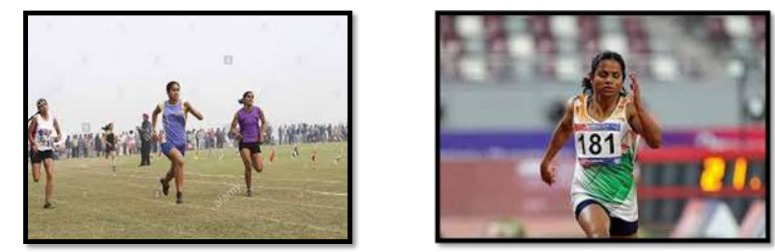
Dutee Chand of Odisha is the first Indian woman sprinter to win gold medal in 100 metre at the 2019 Summer Universiade in Napoli. She finished the sprint in 11.32 seconds which is her best timing.
Being inspired by Dutee Chand many girls of our state are now coming forward to make sports as their career.
The data given below shows the time taken by the girls to complete a race of 100 m in a state level competition.
| Time (in sec) | 10 - 12 | 12 - 14 | 14 - 16 | 16 - 18 | 18 - 20 |
|---|---|---|---|---|---|
| No. of girls | 1 | 3 | 20 | 12 | 4 |
Based on your understanding of the above case study, answer all the five questions below:
1. Name of the term used for finding the difference of maximum and minimum observation in a data is
Answer :
2. How many girls finished the race in less than 16 seconds?
Answer :
3. What is the mean time taken by the girls to complete the race?
Answer :
4. How much faster Dutee Chand is from the mean of the above data?
Answer :
5. The class mark of a class is 12 and its size is 10. The lower limit of the class is
Answer :