
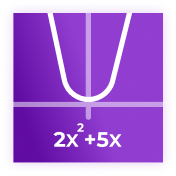
How are Expressions Formed
In algebra, our primary tools are variables and constants, which we combine in various ways to create algebraic –to be filled by the user expressions. Variables, represented by letters like x, y, a, b, etc., are
In contrast, constants are
To craft algebraic expressions, we use operations like addition, subtraction , multiplication , and division.
For instance, consider the expression 5x + 7.
Here, we multiply the variable x by the constant
Another example is 3a - 4b.
In this case, we multiply variable a by
These expressions demonstrate how we can blend constants and variables to represent various mathematical relationships.
Moreover, algebraic expressions can also be formed by combining variables with themselves or with other variables.
For example: x² - y² is an expression where each variable is squared
("Squared" in mathematics refers to the operation of multiplying a number or a variable by itself. The term "squared" comes from the geometric concept where a square's area is calculated) and then subtracted from each other.
Another example is 2xy:
where we multiply two different variables, x and y, together. These combinations offer more complexity and versatility in algebra, allowing us to model a wide range of mathematical scenarios.
(i)
(ii)
(iii)
Describe how the following expressions are obtained: 7xy + 5,
(i)7xy + 5
(ii)
(iii)