

Enhanced Curriculum Support
This is a comprehensive educational resource designed to provide students with the tools and guidance necessary to excel. This support system is structured to cater to various aspects of learning, ensuring that students are well-prepared for academic challenges and practical applications of mathematical concepts. Some are the key benefits are mentioned below:
Comprehensive Learning: This holistic approach helps students gain a thorough understanding of the subject. Practical Application: The resources encourage students to apply mathematical concepts to real-life scenarios, enhancing their practical understanding and problem-solving skills.
Critical Thinking and Reasoning: Value-Based and HOTS questions promote critical thinking and reasoning abilities. These skills are crucial for students to tackle complex problems and make informed decisions.
Exam Preparedness: Sample Question Papers and Practice Questions provide ample preparation for exams. They help students familiarize themselves with the exam format and types of questions, reducing exam anxiety.
Ethical and Moral Development: Value-Based Questions integrate ethical and moral lessons into the learning process, helping in the overall development of students' character and social responsibility. By incorporating these diverse elements, Enhanced Curriculum Support aims to provide a robust and well-rounded knowledge, preparing students for both academic success and real-world challenges.
SecA
1. Round the number 23,487 to the nearest ten, hundred, and thousand
2. What is the smallest 5-digit number?
3. Write the number 67,050 in words.
4. How many thousands are there in the number 128,640?
5. Round off the number 46,785 to the nearest ten thousand.
6. What is the face value of 9 in the number 89,761?
7. Write the successor of 98,999.
8.Write the expanded form of 53,402.
SecB
1. Write the number names for
(a)765,490,786
(b)24,58,765
2. Arrange the following numbers in descending order: 1,503; 1,350; 1,500.
3. Find the difference between the greatest and the smallest 4-digit number.
4. Write the following number in expanded form: 72,386.
5. Round off the number 62,491 to the nearest hundred.
6. Write the number that comes between 99,999 and 100,001.
7. Write 60,000 + 3,000 + 900 + 20 + 5 in standard form.
8. Add the following numbers: 7,345 + 3,129.
9. Subtract the following: 50,621 – 19,874.
SecC
1. A store sold 785 bags in January, 956 bags in February, and 1,234 bags in March. What is the total number of bags sold in these three months?
2. Round off the following numbers to the nearest hundred: 35,479 and 68,532.
3. Write the following numbers in words and place value chart: 834,157 and 482,902.
4. A number has 6 digits. Its first digit is 5 and the last digit is 1. The other digits are in ascending order. Write the number.
5. Explain how you would compare 3-digit and 4-digit numbers using the concept of place value.
6. Find the sum of 3,245; 8,756; and 6,432.
7. Subtract 26,732 from 50,000. What is the result?
SecD
1. Write a number between 5,000 and 6,000 that is divisible by 5 and explain how you know it is divisible by 5.
2. A city has a population of 986,374. Write the population in words and also show its place value chart.
3. Write a detailed explanation of how to round off a 6-digit number to the nearest thousand. Apply this to the number 253,798.
4. A shopkeeper sold 7,845 items in one month. The following month, he sold 8,762 items. How many more items were sold in the second month?
5. Find the sum and difference of the following: 78,932 and 15,687.
6. The number of students in five different classes are: 1,234, 2,654, 3,125, 2,896, and 1,893. Find the total number of students.
Problem 1
Situation: A sports stadium has a seating capacity of 25,000. During a major event, 19,876 people attended.
Questions:
(1)How many seats were left vacant during the event?
(2)Why is it important to have events that bring people together in large numbers?
Problem 2
Situation: Two factories produced 15,876 and 18,542 units of goods respectively in a month.
Questions:
(1)By how many units did the second factory produce more than the first?
(2)Discuss the importance of fair competition between businesses.
Problem 3
Estimation and Rounding Off
Situation: A school library plans to buy new books. The total cost of 48 science books is ₹19,472. Estimate the cost of each book by rounding off the total cost to the nearest thousand.
Questions:
1. What is the estimated total cost and estimated cost per book?
2. Why is it important to budget and plan for expenses?
Q1
1.Write the smallest and the greatest 5-digit numbers using the digits 0,2,4,6,8 (Repetition of digits is not allowed).
Q2
2. Write the following numbers in ascending order. How many of them are even numbers? 63,854, 63,584, 65,348, 68,543, 64,835
Q3
3.What is the successor of greatest 6-digit number?
Questions
1. In Indian System of Numeration, the number 58695376 is written as
2. The largest 4-digit number, using any one digit twice, from digits 5,9, 2 and 6 is
3. One million is equal to
4. Keeping the place of 6 in the number 6350947 same, the smallest number obtained by rearranging other digits is
5. The largest 5-digit number having three different digits is
6. The smallest 4-digit number having three different digits is
7. The largest number which always divides the sum of any pair of consecutive odd numbers is
8. The numbers 4578, 4587, 5478, 5487 are in descending order.
9. The largest six digit telephone number that can be formed by using digits 5, 3, 4, 7, 0, 8 only once is 875403.
10. The number 81652318 will be read as eighty one crore six lakh fifty two thousand three hundred eighteen.
11. The largest 4-digit number formed by the digits 6, 7, 0, 9 using each digit only once is 9760.
Q1
Population processes are typically characterized by processes of birth and immigration, and of death, emigration and catastrophe, which correspond to the basic demographic processes and broad environmental effects to which a population is subject.
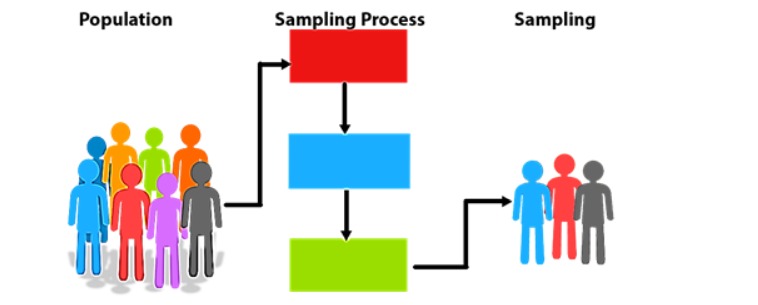
The population of Telangana state in 2011 was 35193978 and the estimated population of the state in 2023 is 38157311
Based on the above information, answer the following questions.
(i) Write the population of 2023 in words.
(ii) Write the place value of '1' in 35193978.
(iii) Write the population of 2011 and 2023 in expanded form.
Sol 1
Solutions
(i) The population of 2023 in words is 3,81,57,311 Three croes eighty one lakh fifty seven thousand three hundred and eleven.
(ii) The place value of 1 in this number 3,51,93,978 is one lakh
(iii) 2011 = 2 x 1000 + 0 + 10 x 1 + 1 x 1
2023 = 2 x 1000 + 10 x 2 + 1 x 3
Q2
Your classroom has a small library with 350 storybooks, 420 textbooks, and 230 reference books.
Based on the above information, answer the following questions.
1. What is the total number of books in the library?
2. If the storybooks are arranged in shelves with 25 books per shelf, how many shelves are needed?
3. How many more textbooks are there compared to reference books?
4. If you need to equally distribute all the books among 10 students, how many books will each student get?
5. What is the ratio of storybooks to the total number of books in the library?
Sol 2
Solutions
1. Total books = 350 + 420 + 230 = 1000 books.
2. Shelves needed =
3. Difference = 420-230 = 190 textbooks.
4. Books per student =
5. Ratio =
Q3
You are planning a birthday party and you have 150 balloons, 200 candies, and 50 gift bags. You plan to put 3 balloons and 5 candies in each gift bag.
Based on the above information, answer the following questions.
1. How many balloons and candies will be used to fill all the gift bags?
2. How many balloons will be left after filling all the gift bags?
3. How many candies will be left after filling all the gift bags?
4. If you decide to put 10 candies in each gift bag instead, how many gift bags can you fill completely?
5. What is the total number of items (balloons, candies, and gift bags) you have for the party?
Sol 3
Solutions
1. Balloons used = 50bags x 3balloons = 150. (all balloons used)
Candies used = 50bags x 5candies = 250 candies.
2. Balloons left = balloons present-balloons needed=150 - 150 = 0.
3. Candies left = not enough candies as we have 200 but we need 250.
4. Gift bags =
5. Total items = 150 + 200 + 50 = 400 items.