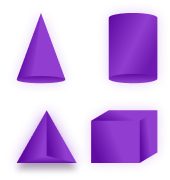
Exercise 13.1
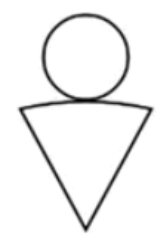
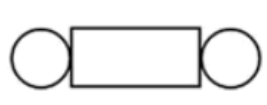
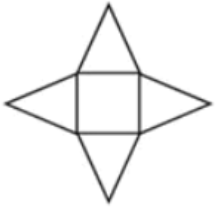
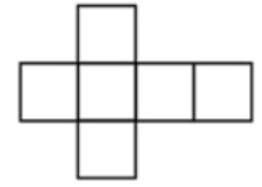
Identify the nets which can be used to make cubes:
You might be aware what a dice looks like. They are cubes with a different number of dots on each face. The numbers of dots range from 1-6. The arrangement of the dots is such that the opposite faces of the die always have a total sum of seven dots on them.

Below we have two nets that make a cube aka a dice. The numbers inserted in each square indicate the number of dots on that particular face. Now, insert the suitable numbers for the faces having variable alphabets (A,B,C,P,Q,R) on them keeping in mind, that the sum for the opposite numbers should add upto 7.
Dice are cubes with dots on each face. Opposite faces of a die always have a total of seven dots on them.
Here are two nets to make dice (cubes); the numbers inserted in each square indicate the number of dots in that box.
Can this be a net for a die? Explain your answer.
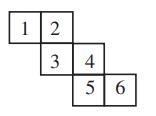
Here is an incomplete net for making a cube. Complete it in at least two different ways. Remember that a cube has six faces. How many are there in the net here?(Give two separate diagrams. If you like, you may use a squared sheet for easy manipulation.)
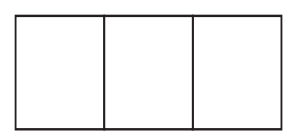
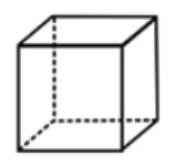
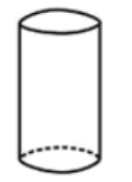
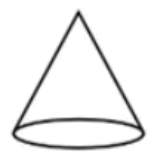
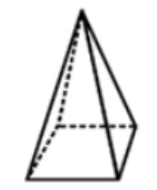
Match the nets with appropriate solids.