
Intersecting Lines
1. Intersecting lines: In the drawing panel, four points are given.Connect points A to D and points B to C with straight lines.
Two lines l and m as shown above, intersect each other and coincide at common intersection point O.
From what we have seen so far, we can deduce that when two lines intersect each other, they share a
Take a sheet of paper and make two folds, creasing them to represent a pair of intersecting lines. Now think about this-
In the canvas below draw two striaght lines such that they intersect and answer the question given below:
(a) Can two lines intersect in more than one point?
Non-straight curves can intersect more than once but not straight curves.
If you have two distinct lines, and they intersect, they will do so at a single unique point.
(b) Can more than two lines intersect in one point?
Infinitely many straight lines can share the same point and intersect at it.
This point of intersection is known as the concurrent point.
Parallel Lines
In the above images, what observations do we make? Lets have some fun. Move the lines around and see if you can make them intersect. Go ahead. Give it a try.
Are there intersecting line segments?
If it appears that they intersect at more than one point, then what you are observing is not an intersection but rather a
The line segments will never meet, however far they are extended.
Lines like these are said to be parallel; and are called
Let's take the example of a table. Take the edges of the table that are opposite to each other. What can be concluded? They are an example of
A surface is that which has length and breadth only.
What about the adjacent sides of a table? They seem to meet at the corner of the table. Thus, they are an example of
Yes, AB and BC intersect at the point
Which line segments intersect at A?
at C?
at D?
Do the lines AD and CD intersect?
Do the lines AD and BC intersect?
You find that on the table’s surface there are line segment which will not meet, however far they are extended. AD and BC form one such pair. Can you identify one more such pair of lines (which do not meet) on the top of the table?
Lines like these which do not meet are said to be parallel; and are called
Give a few examples for a pair of parallel lines from your surroundings.
If two lines say, AB and CD are parallel, we write AB || CD.
Some examples of parallel lines that we can see in real-time include:

Railway Tracks
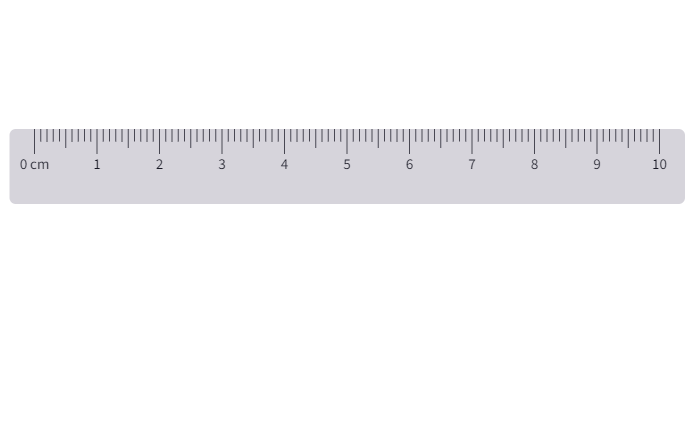
Opposite Edges of Ruler

Colour pencils lined up together
Perpendicular Lines
When two lines intersect and the angle between them is a right angle, then the lines are said to be
For eg- If a line AB is perpendicular to CD, we write AB
If AB ⊥ CD, then should we say that CD ⊥ AB also?
We can find plenty of examples from things around us for perpendicular lines (or line segments). Take the corner of a rectangular table. The English alphabet 'T' is one.
Consider the edges of a post card. The edges are
Let AB be a line segment. Mark its mid point as O. Let OP be a line perpendicular to AB through O.
Since, O is the mid-point of AB, we can say that OP bisects AB i.e. divides AB into two equal parts while also being perpendicular to AB.
Therefore, OP is the perpendicular bisector of AB.