
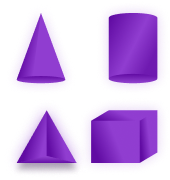
3D Shapes
We have previously studied shapes such as triangles, squares, and rectangles. These shapes extend in only two directions—length and breadth—so they are classified as two-dimensional (2D) shapes.
On the other hand, solid objects have an additional dimension: height or depth. This gives them a three-dimensional (3D) form. 3D shapes include objects like cubes, spheres, and cylinders. Now, we will explore different types of three-dimensional shapes in more detail.
Cuboid
A cuboid is a 3D object, having the length, breadth and height as dimensions (the values for atleast two dimensions is unequal) and the opposite faces are identical.
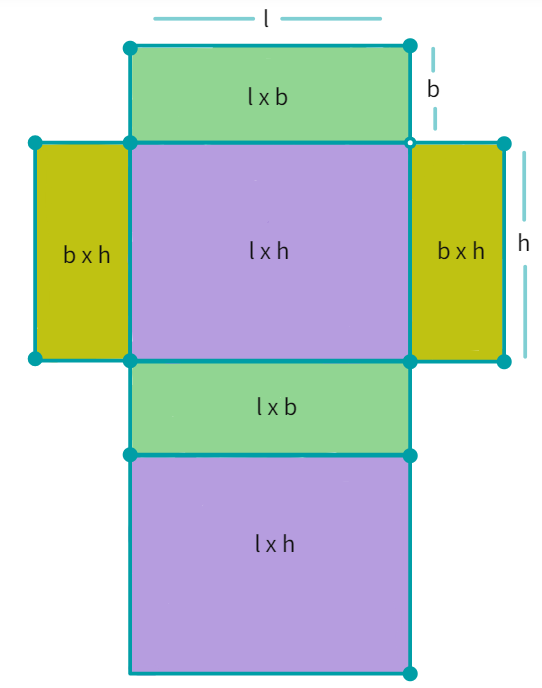
Since, a cuboid has a total of six faces- it has
To find the total surface area:
The Total surface area of a cuboid = h × l + b × l + b × h + l × h + b × h + l × b
= 2(lb + bh + hl)
Total surface area = 2 (h × l + b × h + b × l) = 2(lb + bh + hl)
where h, l and b are the height, length and width of the cuboid respectively.
When we consider, the surface of a room to be painted, how much paint will be needed? We realize that the roof and floor need not be included for this calculation. Like this, there are many cases where only the sides (excluding the top and base) of the solid need to be taken into account. In such cases, we calculate the lateral surface area.
Cube
In the case of cuboid, the length, breadth and height is assumed to be of unequal numerical values. But if
length(l) = breadth(b) = height (h) for a cuboid.
We get a cube. Just like a cuboid, a cube also has a total number of 6 faces but each face is a square, instead of a rectangle. We already know that the area of a square with side length 'a' is:
Thus,
Total surface area of cube =
The total surface area of a cube = 6a2 where, a is the length of a side.
Cylinders
Most of the real life examples of a cylinder we see day to day are
1. Top and base faces are circles of radius "r"
2. The curved(lateral) surface, upon being cut along the vertical length, giving a rectangle of length "2πr" and breadth of "h"

Flower Can

Cold drink can
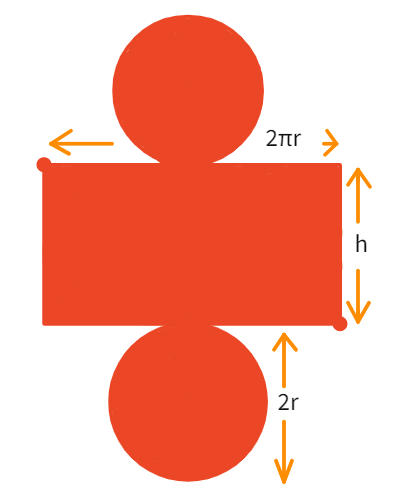
Cylinder Net
Cone
Move the slider to see the net of the cone. We have a
“s” is called the slant height of the cone, the same as the pyramids. Slant height is
Now we just have to add up the area of both faces;
The base of the cone is a circle with radius r, so its area is
Sphere
Earth is a big blue planet covered mostly with oceans. It is the fifth-largest planet in our solar system and for now, the only one known to have liquid water on its surface.
With this vital water supply, our home planet is the only place to host an estimated 8.7 million species in the known universe.
Is there enough water supply on earth for all of the species including us?
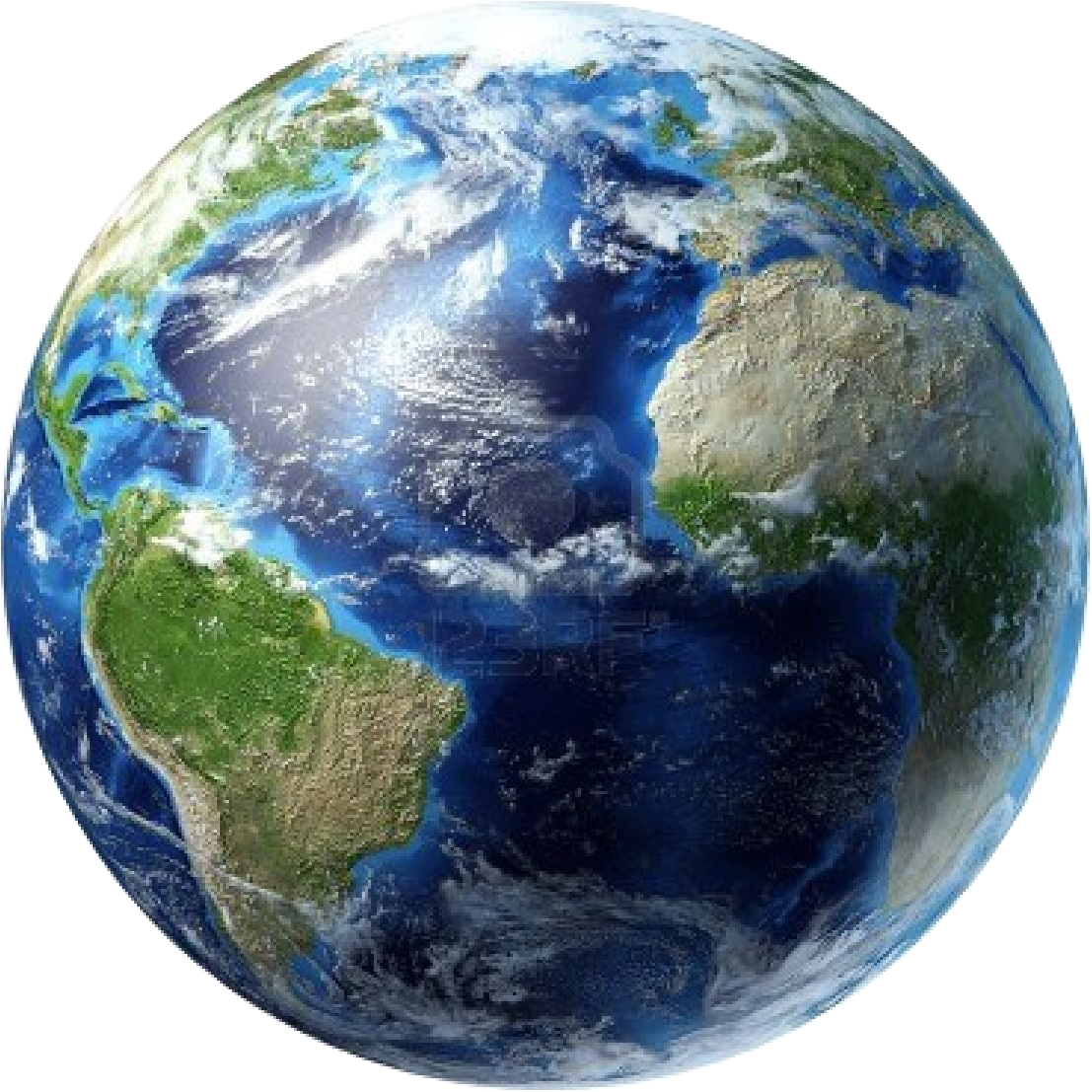
Although our Earth is not perfectly round, it maintains the general shape of a sphere.
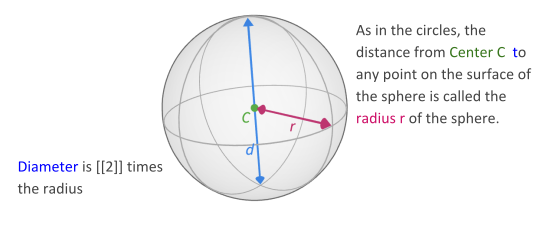
Remember, the set of all points equidistant to a certain point on a two-dimensional plane is called a
If we think of the same definition in 3D, then it becomes a sphere.
The word "sphere" is from Greek meaning "globe".
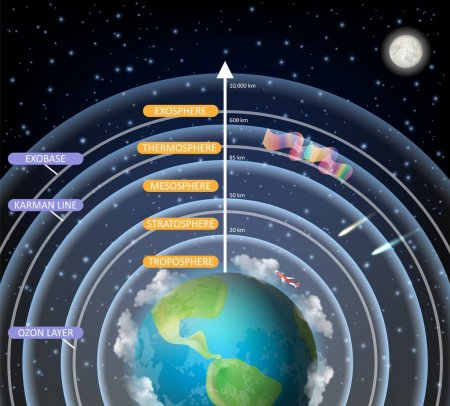
There are many terms related to our world involving the word “sphere”.
For instance, the blanket of gases that surrounds Earth is called the atmosphere. The atmosphere is sliced up into the different zones as the troposphere, stratosphere, mesosphere, and thermosphere.
The Earth has northern and southern hemispheres. Hemisphere means
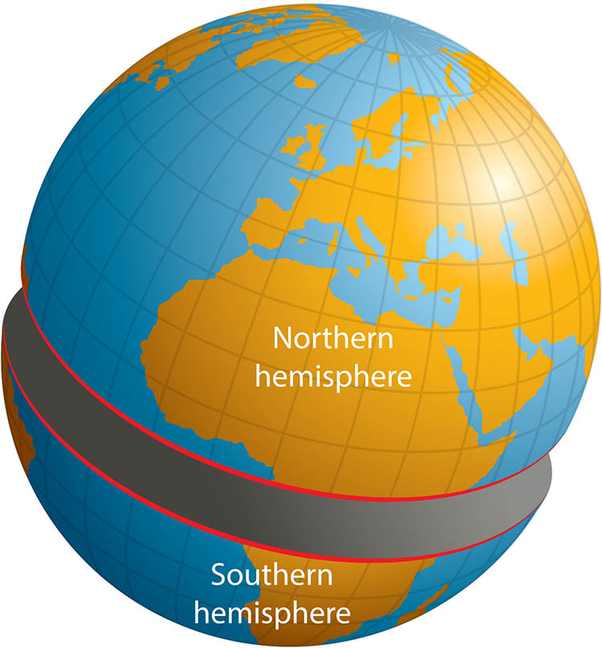
If you divide the Earth into the hemispheres the resulting flat surface is called the Great Circle.
There
Great circles are used in planning routes for aircraft as the air currents and weather conditions.
Prism
Here is a diagrams of prism.
Honeycomb cells are always horizontally aligned. They share walls with the neighbor cell to decrease the amount of wax used to build each cell.
Those shared walls are the lateral faces of the hexagonal prisms. The lateral faces are
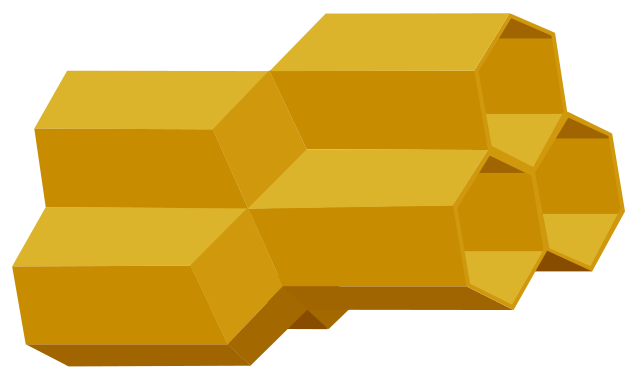
In all kinds of prisms, the bases are connected by a set of rectangles (or sometimes parallelograms) regardless of the type of the base.
The
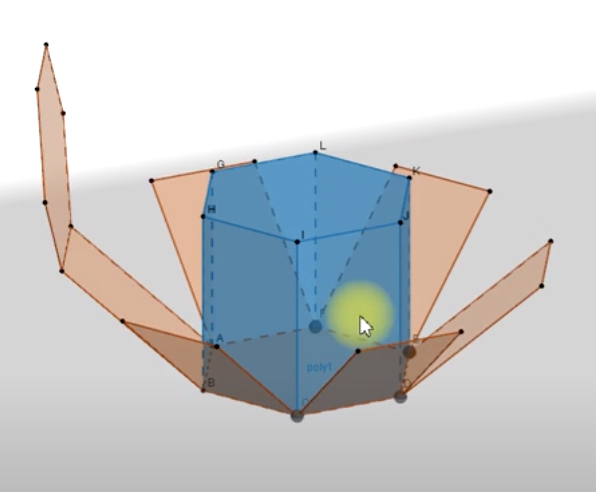
A hexagonal prism has
Pyramids
Pyramids are a particular type of architecture developed since ancient times and still used today for modern buildings. The first pyramids were built in Mesopotamia, but the most famous pyramids are the Egyptian and Mayan pyramids.
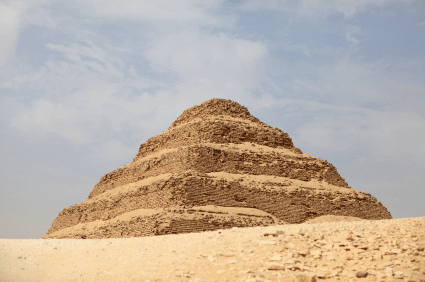
Egyptians knew vertical walls got less stable as they got taller, that’s why they first tried stacked bricks at an incline. They realized that a pyramid gets you the most stability for the least material.
Thanks to the stability of the triangular structure The Great Pyramid of Giza remained the tallest building of the world for 4000 years until the Eiffel Tower was built in 1889. The Great Pyramid is the oldest monument on the list of the Seven Wonders of the Ancient World, built almost 4600 years ago.
Can you imagine the number of stones needed to build these giant ancient wonders?
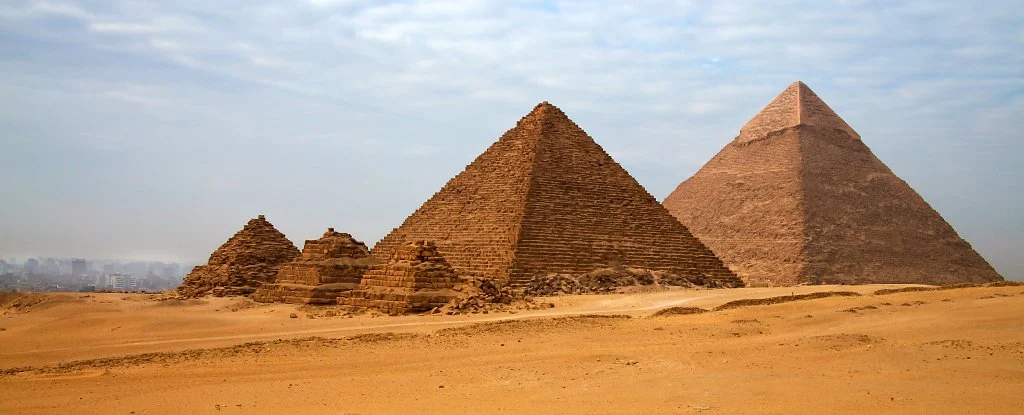
The Great Pyramid of Giza along with the Pyramid of Menkaure and the Pyramid of Khafre
Like prisms, pyramids are polyhedra too. But unlike prisms, pyramids only have
There are lots of different kinds of pyramids, depending on the shape of their base.
Just like prisms, Pyramids are named for the shape of their base.
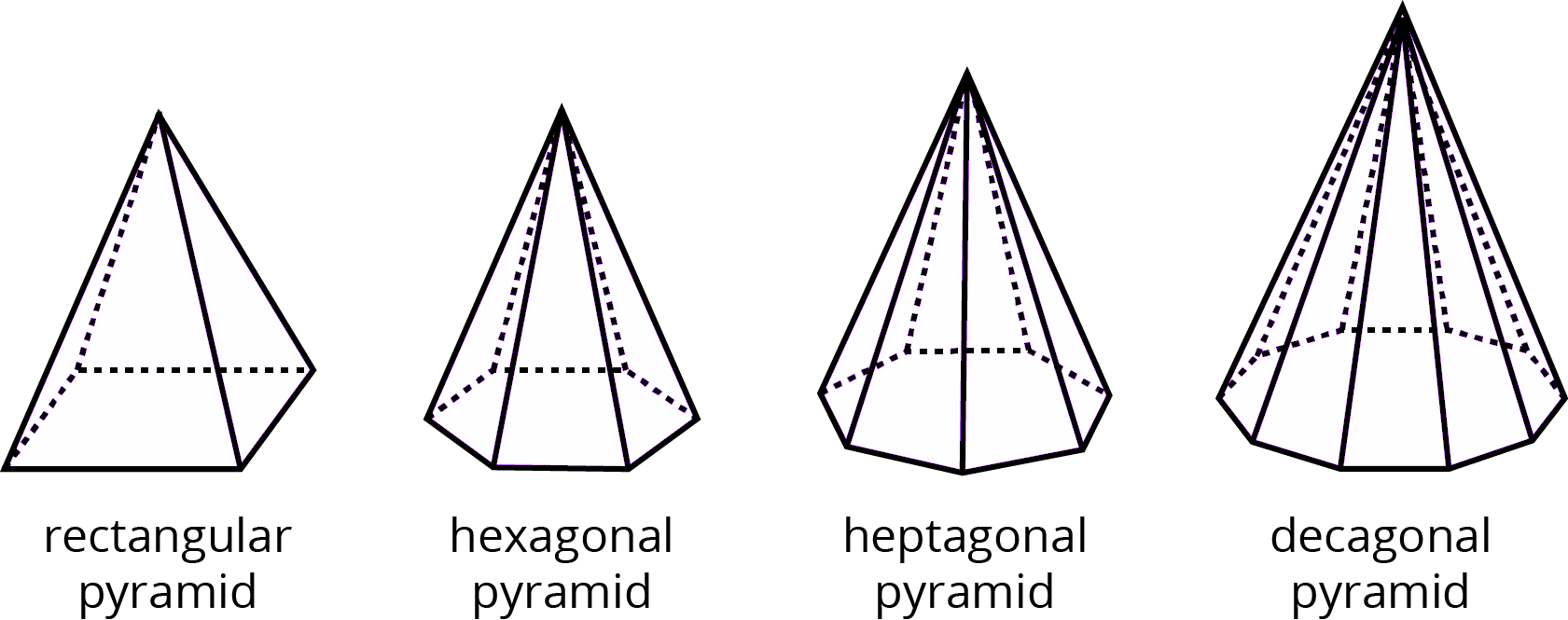
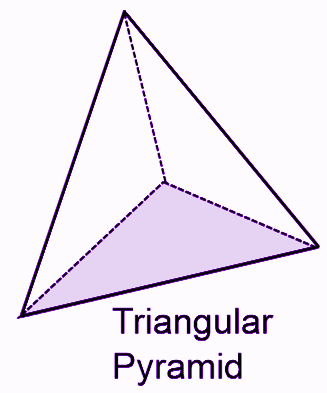
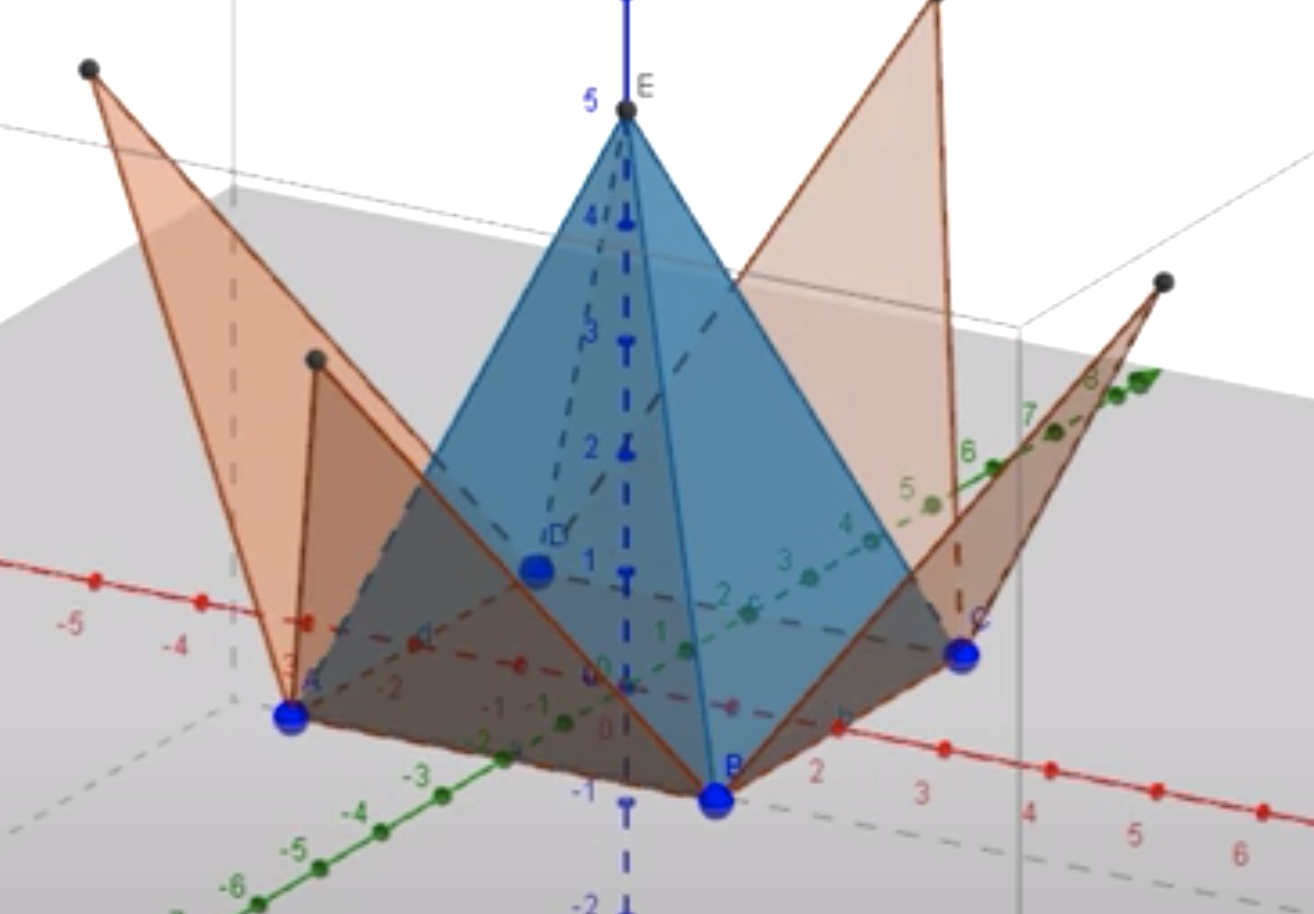
For example, if the base is a square, then it is called a “
Regardless of the shape of its base, a pyramid always has