Innings2
Powered by Innings 2

Glossary

Select one of the keywords on the left…

Chapter 10: Mensuration > Exercise 10.3

Exercise 10.3

1. Find the areas of the rectangles whose sides.

(a) 3 cm and 4 cm

Instructions

Length of the rectangle = cm
Breadth of the rectangle = cm
Area of the rectangle = l × b = 3 × 4 = sq cm.

(b) 12 m and 21 m

Length of the rectangle = m
Breadth of the rectangle = m
Area of the rectangle = l × b = 12 × 21 = sq m.

(c) 2 km and 3 km

Length of the rectangle = km
Breadth of the rectangle = km
Area of the rectangle = l × b = 2 × 3 = sq km.

(d) 2 m and 70 cm

Length of the rectangle = m
Breadth of the rectangle = cm
Area of the rectangle = l × b = 2 × = sq m.

2. Find the areas of the squares whose sides are.

(a) 10 cm

Area of the square = side × side = × = sq cm.

(b) 14 cm

Area of the square = side × side = × = sq cm.

(c) 5 m

Area of the square = side × side = × = sq cm.

The length and breadth of three rectangles are as given below.

Which one has the largest area and which one has the smallest?

(a) 9 m and 6 m

Instructions

Length of the rectangle = cm
Breadth of the rectangle = cm
Area of the rectangle = l × b = 9 × 6 = sq cm.

(b) 17 m and 3 m

Length of the rectangle = cm
Breadth of the rectangle = cm
Area of the rectangle = l × b = 17 × 3 = sq cm.

(c) 4 m and 14 m

Length of the rectangle = cm
Breadth of the rectangle = cm
Area of the rectangle = l × b = 4 × 14 = sq cm.

Rectangle has the largest area while rectangle has the smallest area.

What is the length of the wooden strip required to frame a photograph of length and breadth 32 cm and 21 cm respectively?

Length of the photograph = cm

Breadth of the photograph = cm

We need to find the to calculate the length of the wooden strip.

Perimeter = 2×(l+b) = 2×(32+21) = 2 × =  cm

Thus, the required length of the wooden strip is 106 cm.

What is the cost of tiling a rectangular plot of land 500 m long and 200 m wide at the rate of ₹8 per hundred sq m?

Instructions

Length of the rectangular plot = m
Breadth of the rectangular plot = m
∴ Area of the plot = l × b = 500 m × 200 m = sq m
Now rate of tiling the plot = ₹ per 100 sq m
Cost of tiling the garden = ₹( × 100000 ) = ₹
Hence the required cost = ₹8000

A table-top measures 2 m by 1 m 50 cm. What is its area in square metres?

Instructions

Length of the table-top = m
Breadth = m cm = m
∴ Area of the table-top = l × b = 2 m x 1.50 m = sq m
Hence, the area of table-top = 3 sq m.

A room is 4 m long and 3 m 50 cm wide. How many square metres of carpet is needed to cover the floor of the room?

Length of the room = m

Breadth = 3 m 50 cm = m

Area of the room = l × b = 4 m × 3.5 m = sq m

Hence, the area of the carpet needed = 14 sq m

A floor is 5 m long and 4 m wide. A square carpet of sides 3 m is laid on the floor. Find the area of the floor that is not carpeted.

Length of the floor = m , breadth = m

Area of the floor = length × breadth = 5 × 4 = sq m

Side of the carpet = m

Area of the square carpet = side × side = 3 × 3 = sq m

Area of the floor which is not carpeted = sq m – sq m = sq m.

Five square flower beds each of sides 1 m are dug on a piece of land 5 m long and 4 m wide. What is the area of the remaining part of the land?

Instructions

Side of the square flower bed = m.
Area of 1 square flower bed = m × m = sq m.
Area of 5 square flower beds = 1 sq m × = sq m.
Now length of the land = m , breadth = m
Area of the land = length × breadth = 5 m × 4 m = sq m
Area of the remaining part of the land = sq m – sq m = sq m.

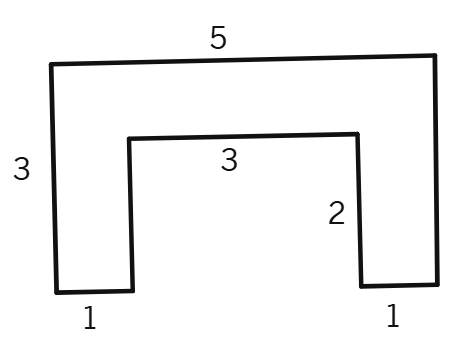
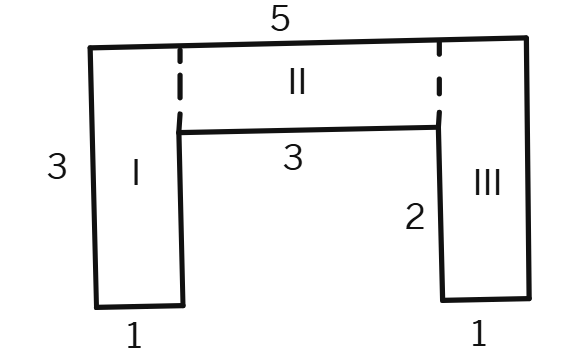
By splitting the following figures into rectangles, find their areas (The measures are given in centimetres).
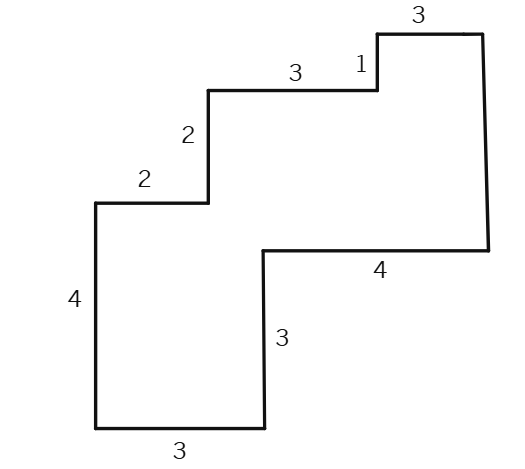
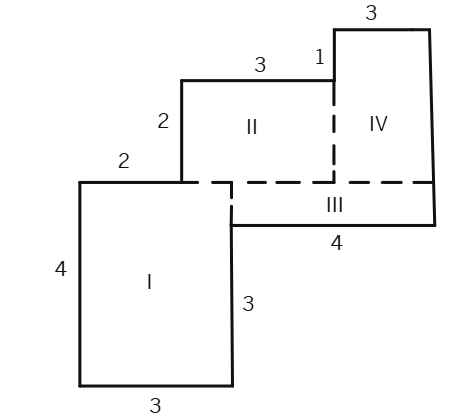
Area of the rectangle =
Area of the rectangle I = cm × cm = sq cm
Area of the rectangle II = cm × cm = sq cm
Area of the rectangle III = cm × cm = sq cm
Area of the rectangle IV = cm × cm = sq cm
Total area of the whole figure = 12 sq cm + 6 sq cm + 4 sq cm + 9 sq cm = sq cm.
Area of the rectangle I = cm × cm = sq cm
Area of the rectangle II = cm × cm = sq cm
Area of rectangle III = cm × cm = sq cm
Total area of the given figure = 3 sq cm + 3 sq cm + 3 sq cm = sq cm.

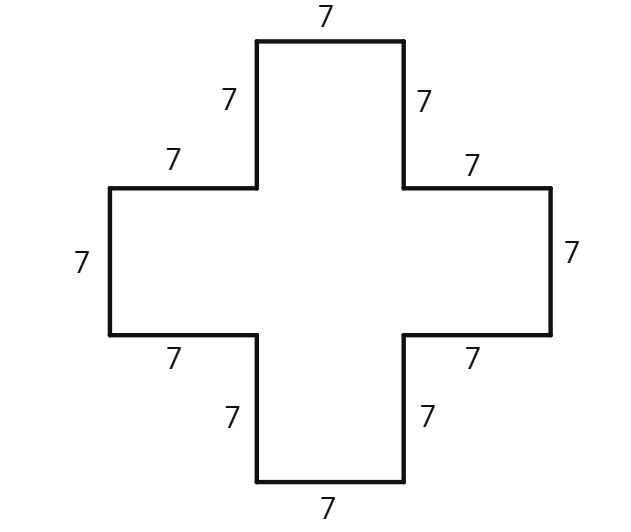
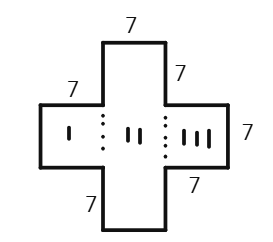
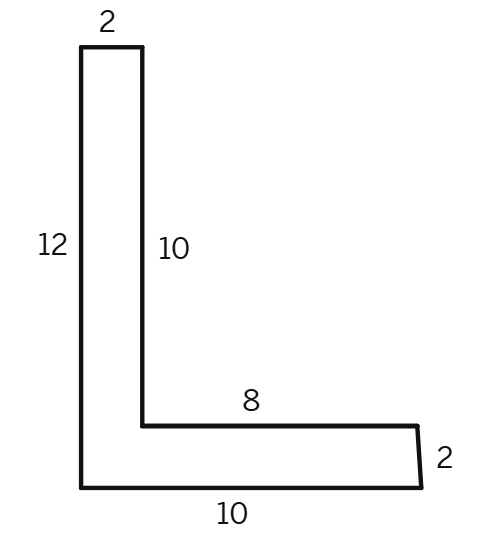
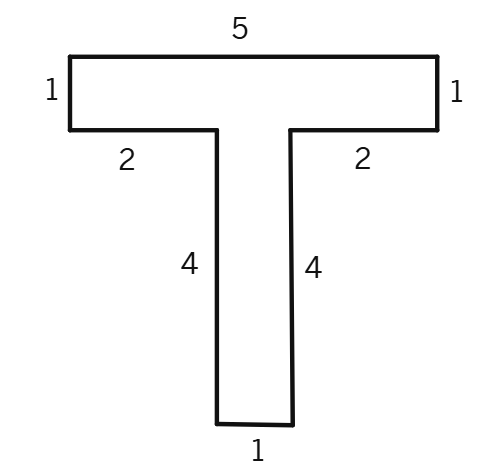
Split the following shapes into rectangles and find their areas. (The measures are given in centimetres)
(a)
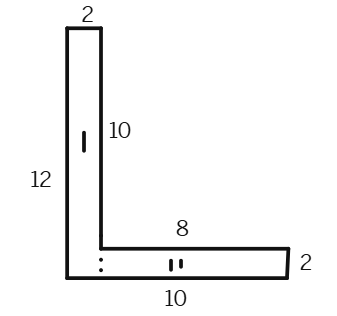
Area of the rectangle I = 12 cm × cm = sq cm

Area of the rectangle II = cm × 2 cm = sq cm

Total area of the whole figure = sq cm + sq cm = sq cm.

(b)

Area of the rectangle I = cm × 7 cm = sq cm

Area of the rectangle II = cm × 7 cm = sq cm

Area of the rectangle III = 7 cm × cm = sq cm

Total area of the whole figure = 49 sq cm + 147 sq cm + 49 sq cm = sq cm.
(c)

Area of the rectangle I = cm × cm = sq cm

Area of the rectangle II = cm × 1 cm = sq cm

Total area of the whole figure = 5 sq cm + 4 sq cm = sq cm.

How many tiles whose length and breadth are 12 cm and 5 cm respectively will be needed to fit in a rectangular region whose length and breadth are respectively.

Length of one tile = cm

Breadth of the tile = cm

Area of 1 tile = length × breadth = 12 cm × 5 cm = sq cm

(a) 100 cm and 144 cm

Length of the rectangular region = cm
Breadth of the region = cm
Area of the rectangular region = length × breadth = 144 cm × 100 cm = sq cm
Number of tiles needed to cover the whole rectangular region = 14400 sq cm ÷ 60 sq cm = tiles

(b) 70 cm and 36 cm.

Length of the rectangular region = cm
Breadth of the region = cm
Area of the rectangular region = length × breadth = 70 cm × 36 cm = sq cm
Number of tiles needed to cover the whole rectangular region = 2520 sq cm ÷ 60 sq cm = tiles.