
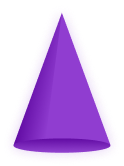
Surface Area of a Right Circular Cone
In the earlier grades, having studied the surface areas of basic shapes like cube, cuboid and cylinder, let's move on to study the surface area of cone.
We have upto now, been generating solids by stacking up congruent figures. A prisms is one such example. Let's look at another kind of solid which is not a prism. These kinds of solids are called pyramids.

Activity: Cut out a right-angled triangle from a piece of paper. Paste the cutout on a long thick string along one of the perpendicular sides of the triangle i.e. the side that corresponds as the height. Now, hold the string with hands on either sides of the cutout and rotate the triangle using the string a number of times.
The shape that is generated is a right circular cone. A right angled triangle, when rotated to a full
The'h' and 'r' denote the height and radius of the cone while 'l' is called the slant height of the cone i.e. the length of the curved surface's slope.
Since, the cone is right-angled, we also get that:
We know that the base of the cone is a
Thus, the area of the base can be evaluated. Now, how can the area of the entire curved surface be found?
Activity: Take a cone which doesn't have any operlapping surface. If unavailable, make a cone from a piece of paper. Cut out the cone along the slant-height .Upon opening it out and flattening the material, we will see a circular shape with a sector cut out of it (resembling a piece of cake which has a portion of it cutout).
Now, mark and cutout this circular shape into smaller triangles, all having their height cut out along the original slant height of the cone. Which in this case,is the radius of the circular shape. Now, individually, measure and calculate the area of each triangle.
Area of each triangle =
Thus we can say,
Area of the entire curved surface = sum of all the smaller triangles
=
=
=
= πr x slant height = πrl
Note: The curved portion of the figure makes up the perimeter of the base of the cone and the circumference of the base of the cone becomes 2πr, where r is the base radius of the cone.
Now if the base of the cone is to be closed, then a circular piece of paper of radius r is also required whose area is
So we have,
Curved Surface Area of a Cone = πrl
where r is its base radius and l its slant height.
Total Surface Area of a Cone = πrl + πr2 = πr(l + r)
Example 1 : Find the curved surface area of a right circular cone whose slant height is 10 cm and base radius is 7 cm.
Example 2: The height of a cone is 16 cm and its base radius is 12 cm. Find the curved surface area and the total surface area of the cone (Use π = 3.14)
Note: Round off the decimals to the nearest whole number
- Since,
l 2 h 2 + r 2 l . - Calculating, we get l =
cm. - We know Curved surface area =
- Calculating, we get the value to be
cm 2 - We also know, total surface area =
where l and r have the usual dimensional abbreviations. - Substitute the values in the eq., we get the answer as
cm 2 - This gives us the value
- We have found the desired answers.
Example 3: A corn cob, shaped somewhat like a cone, has the radius of its broadest end as 2.1 cm and length (height) as 20 cm. If each 1
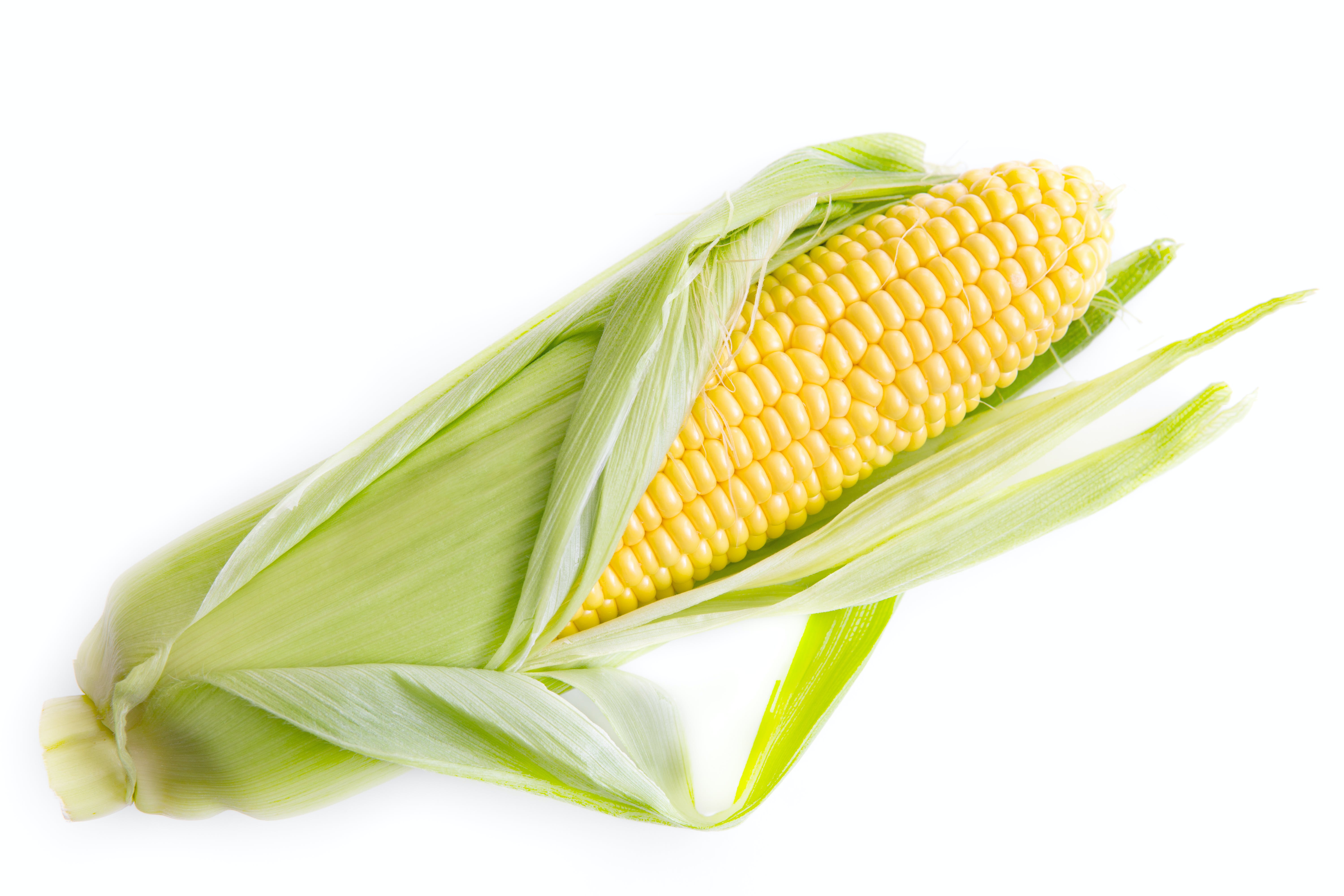
- The corn grains cover the
of the corn cob. - We know that is equal to
where l - slant height and r - radius. - Calculating the value of l
- We find the value of l =
cm (Upto two decimal places) - Calculating the numerical value of the surface area
- We find the value to be
cm 2 - We have been given that the number of grains of corn on 1
cm 2 - Thus, number of grains on the cob =
(Enter the nearest whole number) - So, approximately 531 grains of corn are present on the cob.