

Measuring Using Fractional Units
Take a strip of paper. We consider this paper strip to be one unit long.
So to be
Fold the strip into two equal parts and then open up the strip again.
Taking the strip to be one unit in length, what are the lengths of the two new parts of the strip created by the crease?
So it is
What will you get if you fold the previously-folded strip again into two equal parts? You will now get
So it is
What will you get if you fold the previously-folded strip again into four equal parts? You will now get
So it is
Figure it Out
1
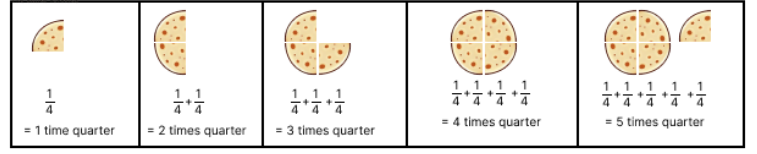
1. Continue this table of
Starting with
Continuing, 4 times
2
2. Can you create a similar table for
Yes, starting with
2 times
3 times
4 times
5 times
3
3. Make
4
4. Draw a picture and write an addition statement as above to show:
a. 5 times
b. 9 times
5. Match each fractional unit with the correct picture:
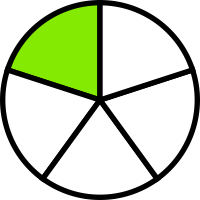

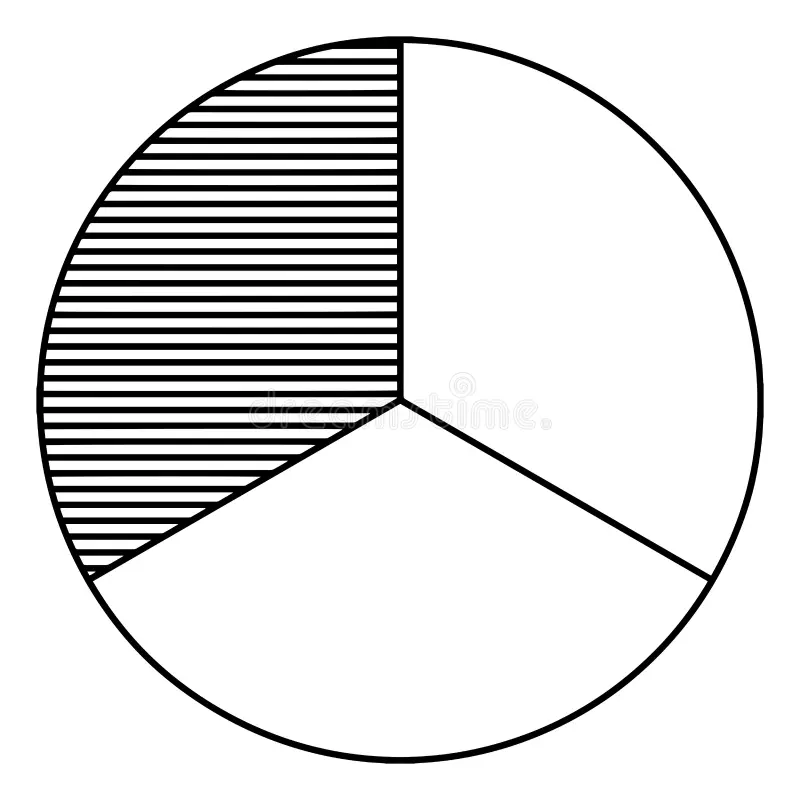
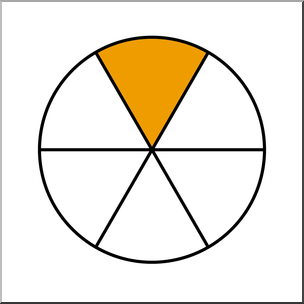
We usually read the fraction
Recall what we call the top number and the bottom number of fractions. In the fraction
Give several opportunities to the children to explore the idea of fractional units with different shapes like circles, squares, rectangles, triangles, etc.