

Right Circular Cylinder
Most of the real life examples of a cylinder we see day to day are
1. Top and base faces are circles of radius "r"
2. The curved(lateral) surface, upon being cut along the vertical length, giving a rectangle of length "2πr" and breadth of "h"

Flower Can
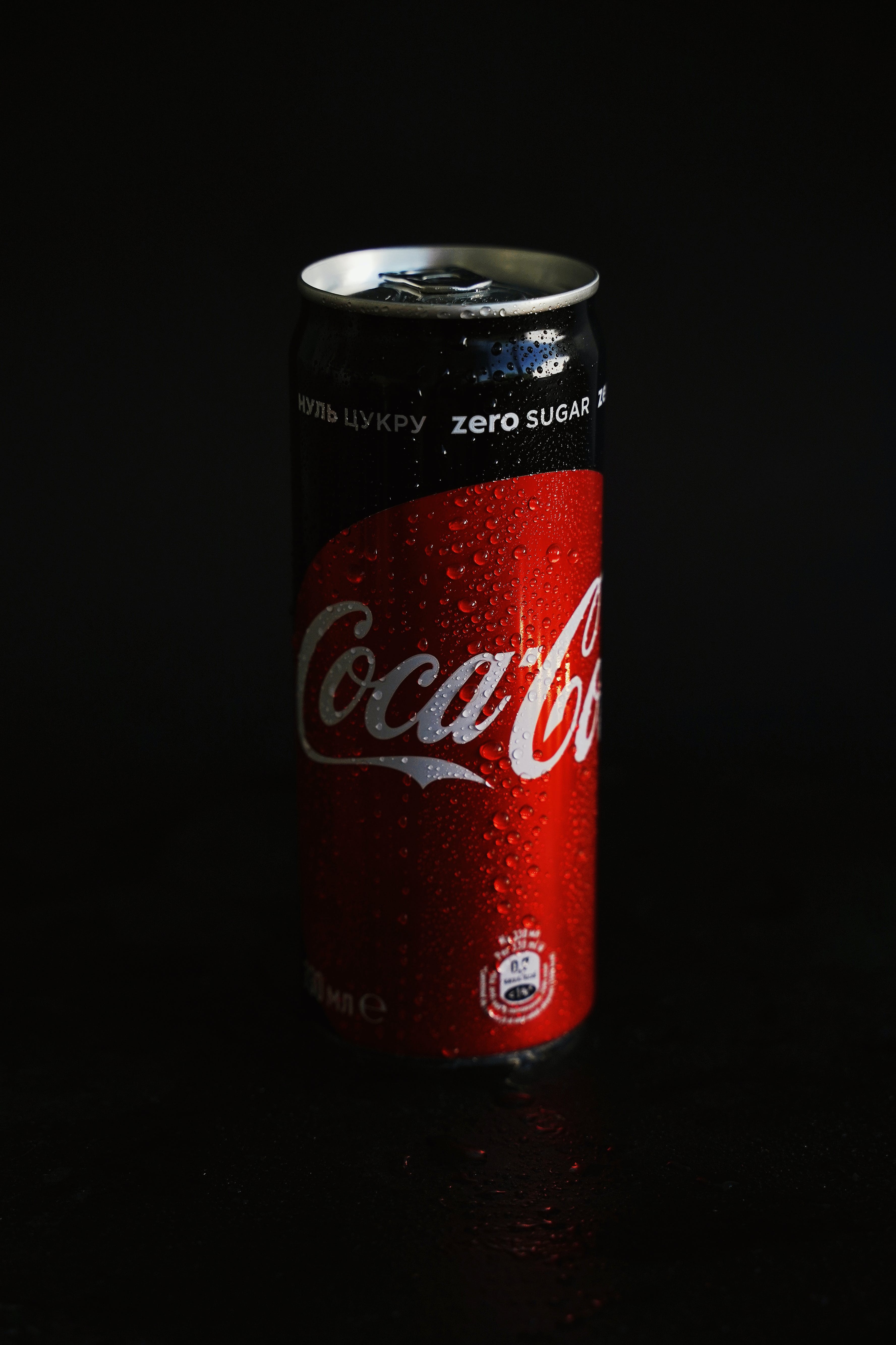
Cold drink can
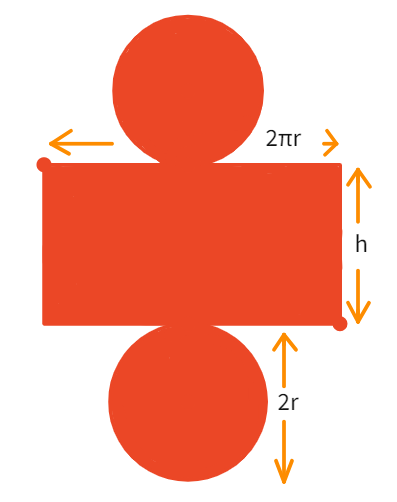
Cylinder Net
Find Curved surface area of the following cylinders:
(i) r = 14 cm, h = 8 cm
(ii) d = 2 m , h = 2 m
- We can see that: Surface Area of Cylinder =
× Top/Base Circle + Lateral surface - Thus, Surface Area of Cylinder = 2 ×
+ where r and h are radius and height of the cylinder. - Simplifying, we get: Surface Area of Cylinder = 2πr(r + h)
- We have found the surface area formula for a cylinder.
Thus,
Volume of cylinder = area of base × height = πr2 x h = πr2h
A company sells biscuits. For packing purpose they are using cuboidal boxes:
(1) Box A = 3 cm × 8 cm × 20 cm
(2) Box B = 4 cm × 12 cm × 10 cm
What size of the box will be economical for the company?
- First, let's calculate the volume of both the boxes.
- Volume(Box A) =
cm 3 cm 3 - We see that both are equal.
- In order to check which box is more economical, we can check the material used for packaging i.e. we need to calculate the
of the boxes. Also - Surface area of a box of length l, breadth b and height h =
- Thus, Surface area for A = Material needed for box A =
cm 2 - Surface area for B = Material needed for box B =
cm 2 - Thus,
is more economical as it will be using lesser amount of material. - Thus, Box B is more economical for the manufacturers.