
Sphere
Earth is a big blue planet covered mostly with oceans. It is the fifth-largest planet in our solar system and for now, the only one known to have liquid water on its surface.
With this vital water supply, our home planet is the only place to host an estimated 8.7 million species in the known universe.
Is there enough water supply on earth for all of the species including us?
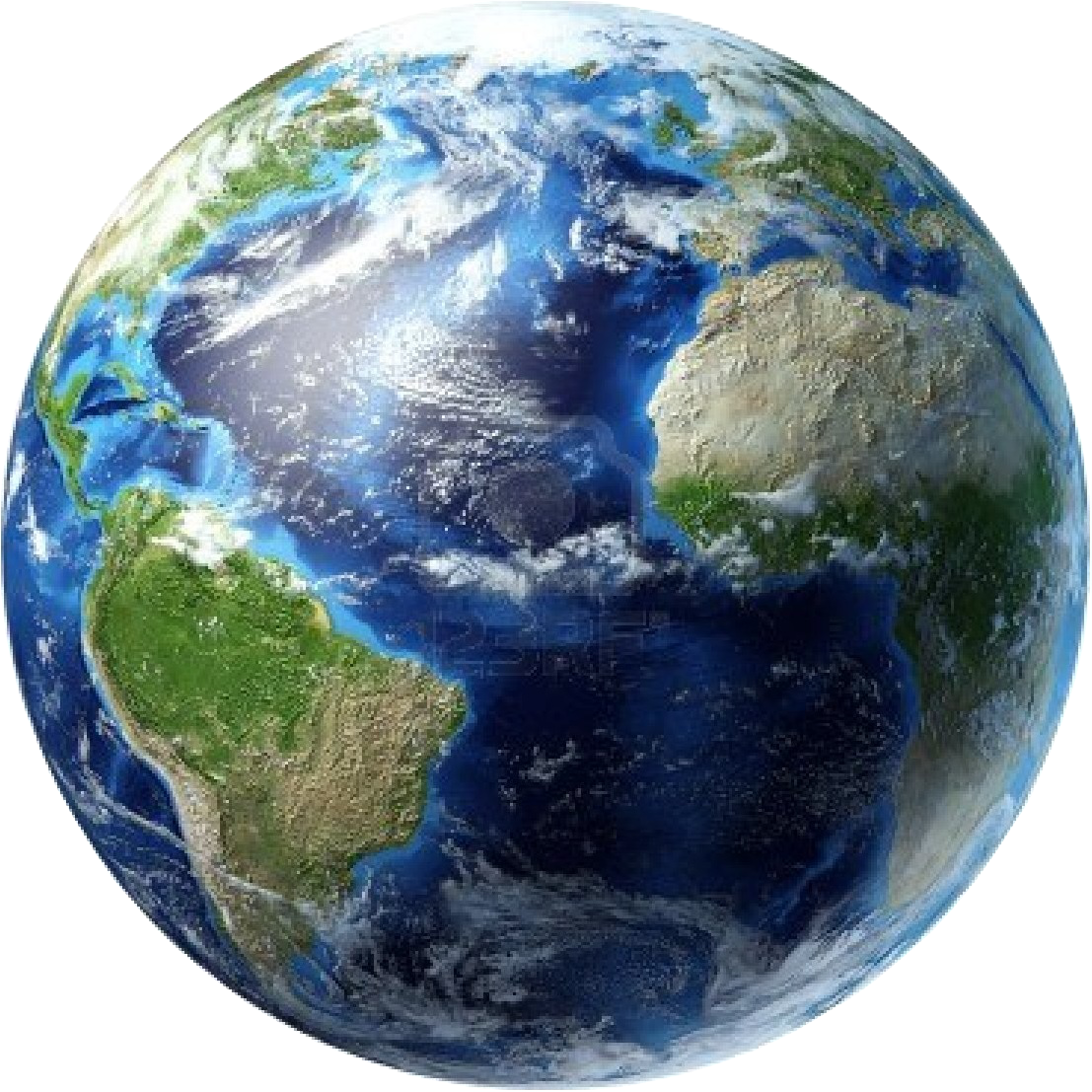
Although our Earth is not perfectly round, it maintains the general shape of a sphere.
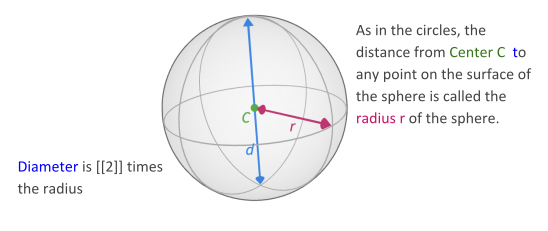
Remember, the set of all points equidistant to a certain point on a two-dimensional plane is called a
If we think of the same definition in 3D, then it becomes a sphere.
The word "sphere" is from Greek meaning "globe".
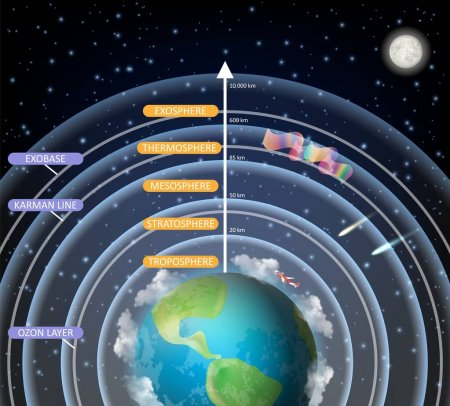
There are many terms related to our world involving the word “sphere”.
For instance, the blanket of gases that surrounds Earth is called the atmosphere. The atmosphere is sliced up into the different zones as the troposphere, stratosphere, mesosphere, and thermosphere.
The Earth has northern and southern hemispheres. Hemisphere means
A sphere is a 3-D representation of a
Therefore, every point on the surface lies at a constant distance (called
We can visualize a sphere by pasting a long string to a circular disc along its diameter and rotating it as we did with the triangle in the previous section.
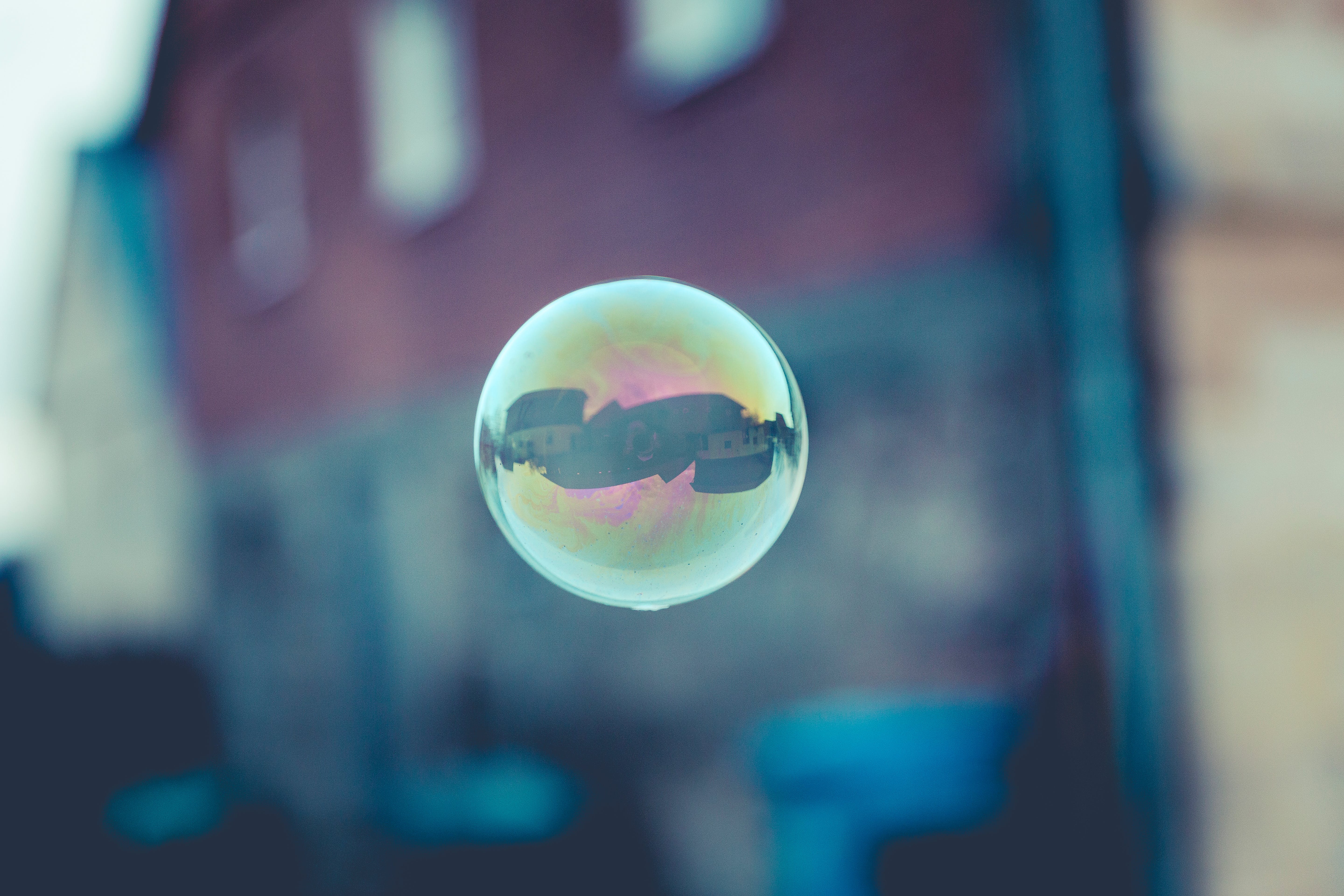
And logically, the centre of the circle, becomes the centre of the sphere. Now moving on to the surface area of a sphere.
Example 4: Find the surface area of a sphere of radius 7 cm.
- We know- surface area of a sphere =
where r- radius of sphere - Substituting values, we get:
cm 2 - We have found the desired answers.
A sphere is a perfectly round three-dimensional object where every point on the surface is equidistant from its center.
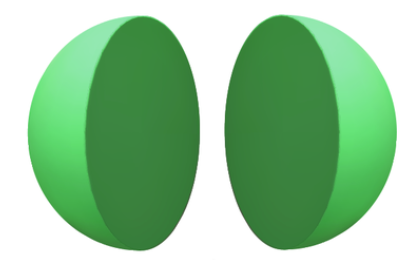
If we cut a sphere into two equal parts along its diameter using a flat plane, each resulting half is called a
A sphere has one curved surface.
When cut into two equal parts, each hemisphere has:
One curved surface (which was originally part of the sphere).
One flat circular surface (where the cut was made).
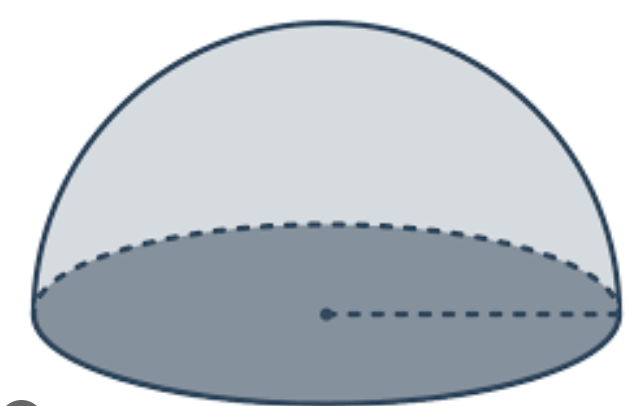
Since a sphere has a total surface area of
Surface area of a hemisphere =
=
The base of hemisphere is a
Its area is equal to =
Total surface area of hemisphere = Its curved surface area + area of its base
= 2π
Let's try an activity regarding the volume of a sphere.
Activity: Take spheres of different radii and a container filled with water upto the brim. Place the filled up container in a trough to collect the displaced water.
Now, one at a time, place the sphere in the container and let the displaced water fall into the trough. After every trial for different spheres, measure the amount of water overflown into the trough. Also, calculate the value for
The amount of water displaced will be equal to the value of
Volume of a Sphere =
where r is the radius of the sphere.
What about the volume of a hemisphere? We know that the hemisphere is one half of a split sphere. Thus,
Volume of a Sphere =
where r is the radius of the hemisphere.
Example 10: Find the volume of a sphere of radius 11.2 cm.
Note: Round off to the nearest whole number
- Volume of sphere :
where r is the radius. - Substituting values in the volume formula
- We get the volume =
cm 3 - We have found the desired answer.