Innings2
Powered by Innings 2

Glossary

Select one of the keywords on the left…

Chapter 5: Parallel and Intersecting Lines > Alternate Angles

Alternate Angles

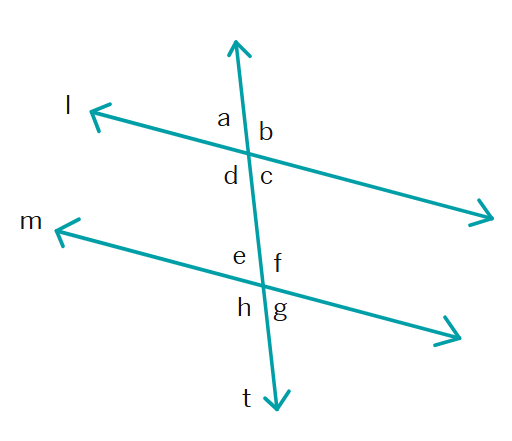
In the given figure, ∠d is called the alternate angle of ∠, and ∠c is the alternate angle of ∠.

You can find the alternate angle of a given angle, say ∠f, by first finding the corresponding angle of ∠f, which is ∠ and then finding the vertically opposite angle of ∠b, which is ∠.

Activity 6

In the above figure, if ∠f is 120° what is the measure of its alternate angle ∠d?

We can find the measure of ∠d if we know ∠ because they are vertically opposite angles. Remember, vertically opposite angles are .

What is the measure of ∠b? It is ° because it is the angle of ∠f. So, ∠d also measures °.

In fact, ∠f = ∠b irrespective of the measure of ∠f. Why? Because ∠b is the angle of ∠f.

Similarly, ∠b = ∠d irrespective of the measure of ∠b. Why? Because ∠d is the angle of ∠b. So, it must always be the case that ∠f = ∠.

Using our understanding of corresponding angles without any measurements, we have justified that alternate angles are always equal.

Alternate angles formed by a transversal intersecting a pair of parallel lines are always equal to each other.

Example 1: In the figure, parallel lines l and m are intersected by the transversal t. If ∠6 is 135°, what are the measures of the other angles?
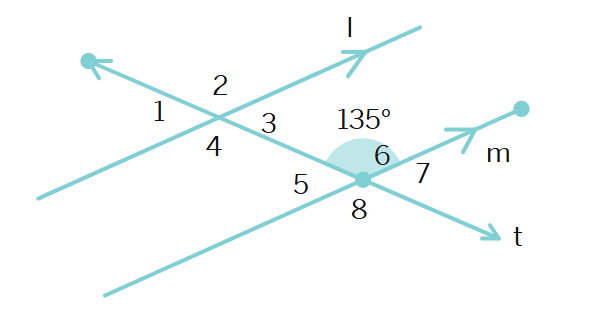
∠6 is 135°, so ∠2 is also °, because it is the angle of ∠6 and the lines l and m are .
∠8 is °, because it is the opposite angle of ∠6. ∠4 is ° because it is the angle of ∠.
∠2 is ° because is the vertically opposite angle of ∠.
So, ∠2, ∠4, ∠6, and ∠8 are all °.
∠5 and ∠6 are a pair, together they measure °.
If ∠6 is 135°, then ∠5 = = °
We can similarly find out that ∠1, ∠3, and ∠7 measure °.

Example 2: In the figure, lines l and m are intersected by the transversal t. If ∠a is 120° and ∠f is 70°, are lines l and m parallel to each other?
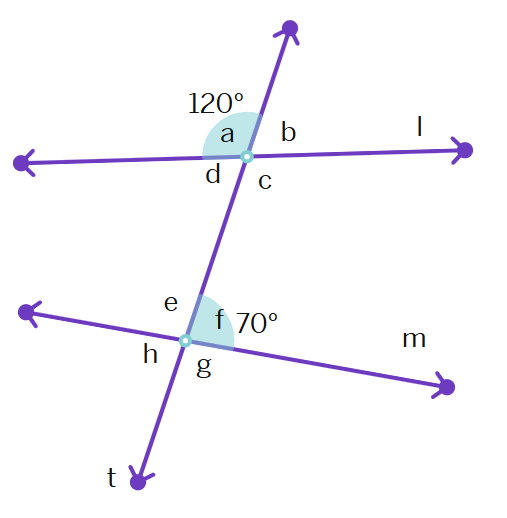
∠a is °, so ∠b is ° because ∠a and ∠b form a pair.
∠b is a corresponding angle of ∠.
If l and m are parallel, ∠b should be equal to ∠f, however, they are not .
Therefore, lines l and m are not to each other as the corresponding angles formed by the transversal t are not to each other.

Example 3: In the figure, parallel lines l and m are intersected by the transversal t. If ∠3 is 50°, what is the measure of ∠6?
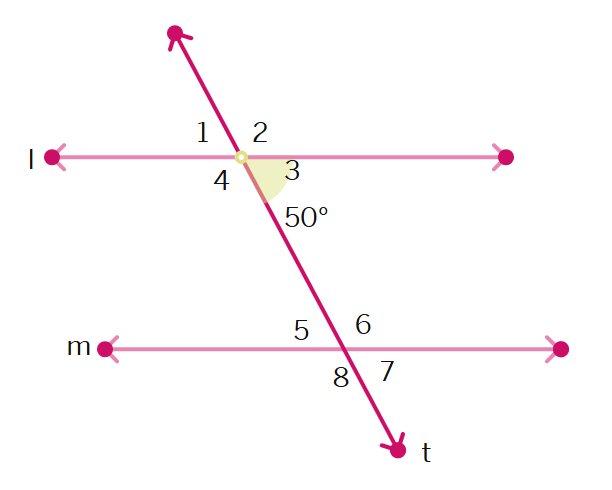
∠3 is °; therefore, ∠2 is °, because ∠2 and ∠3 form a pair, and linear pairs always add up to °.
∠2 and ∠6 are angles, and they need to be since lines l and m are .
So, ∠6 is °.
Angles ∠3 and ∠6 are called angles.

Is there a relation between ∠3 and ∠6? You could try to find the relationship by taking different values for ∠3 and see what ∠6 is. Once you find a relation, try to justify it or prove that this relation holds always. You will find that the sum of the interior angles on the same side of the transversal always add up to °.

Example 4: In the figure, line segment AB is parallel to CD and AD is parallel to BC. ∠DAC is 65° and ∠ADC is 60°. What are the measures of angles ∠CAB, ∠ABC, and ∠BCD?
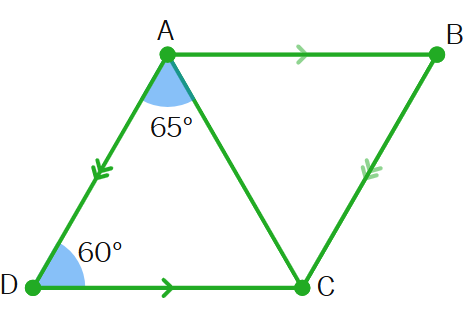
Let us observe the parallel lines AB and CD. AD is a of these two lines.
We know that the sum of the interior angles formed by a transversal on a pair of parallel lines adds up to °.
So, ∠ADC + ∠DAB = °° + ∠DAB = ° ⇒ ∠DAB = °.
Can we find ∠CAB from this? ∠ = ∠ + ∠CAB. So, ° = ° + ∠CAB. So, ∠CAB = °.
Let us observe the parallel line segments AD and BC. They are intersected by a transversal CD. So, ∠ADC + ∠ = °, because they are angles on the same side of the transversal.
Since ∠ADC is given as °, ∠BCD = °.
Similarly, we find ∠ABC = °.
Therefore, ∠CAB = °, ∠ABC = °, and ∠BCD = °.

Figure it Out

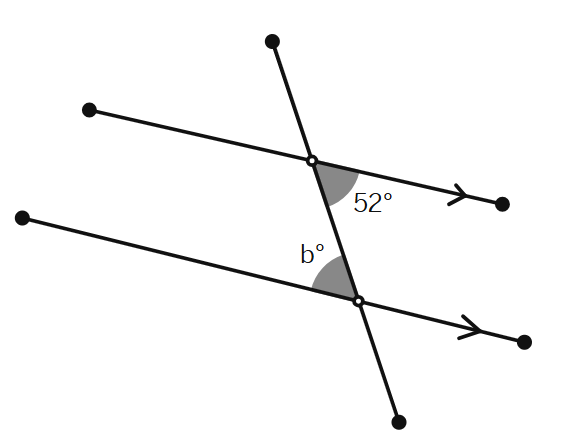
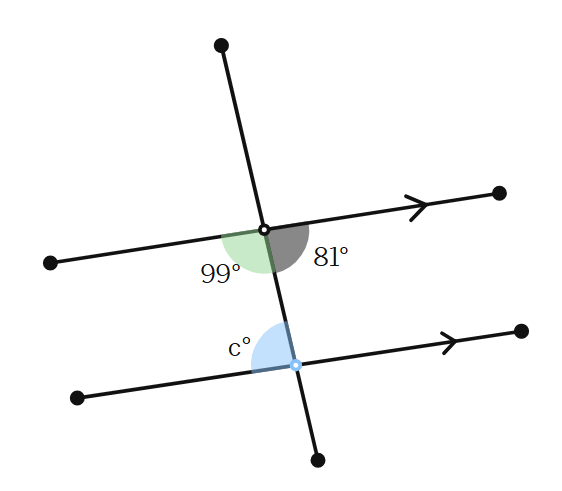
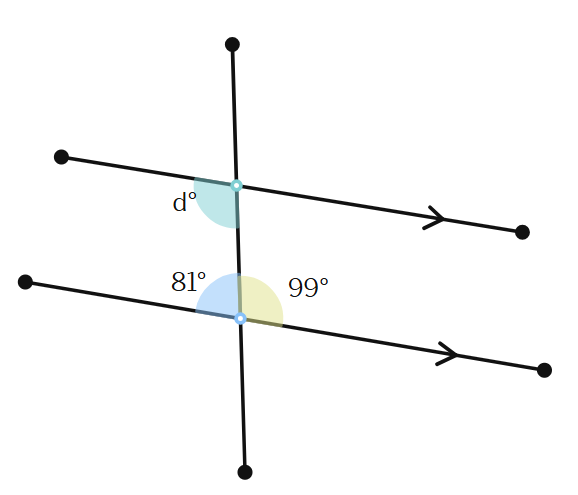
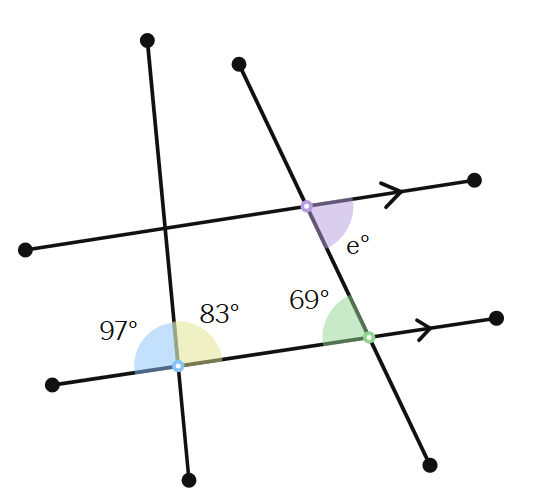
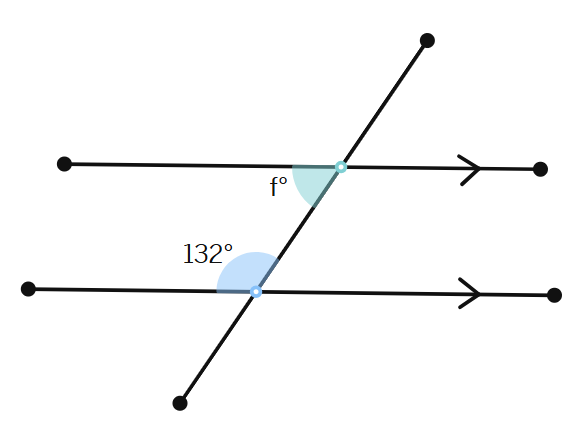
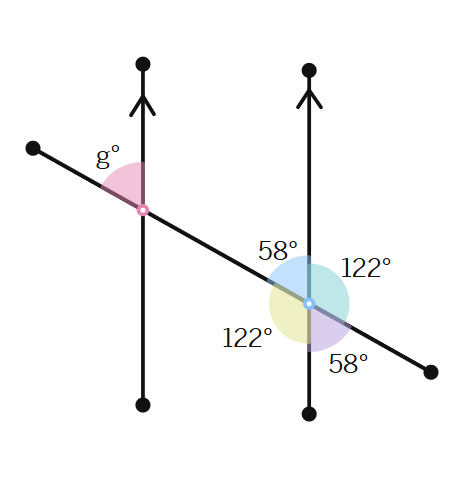
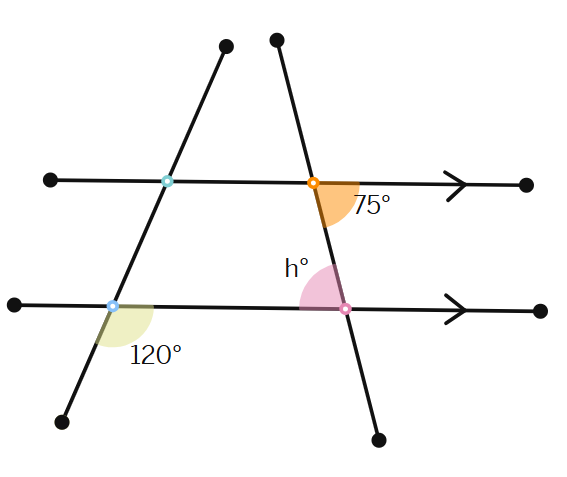
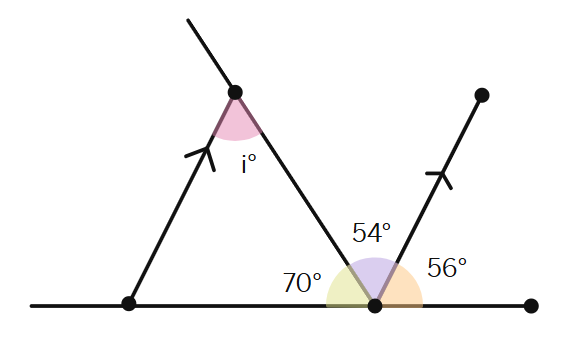
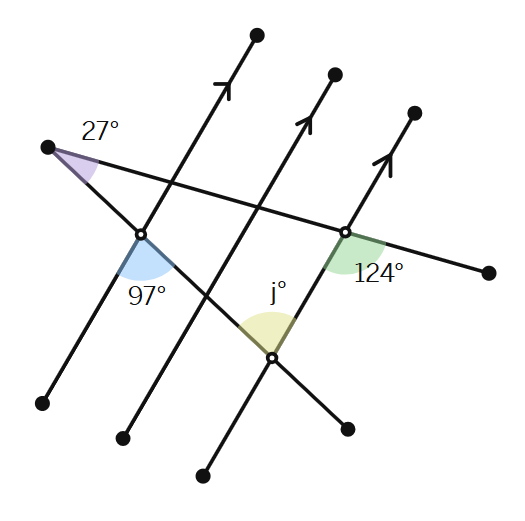
1. Find the angles marked below.
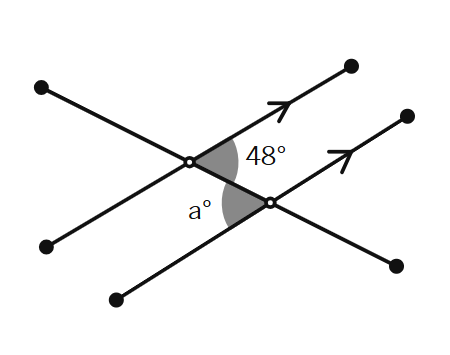
(i) a = ° as the given angles are angles.
(ii) b = ° as the given angles are angles.
(iii) c = ° as the given angles are angles.
(iv) d = ° as the given angles are angles.
(v) e = ° as the given angles are angles.
(vi) f = ° as the given angles are angles (angles on the same side of transversal).
(vii) g = ° as the given angles are angles.
(viii) h = ° as the given angles are angles.
(ix) i = ° as the given angles are angles.
(x) j = ° as the given angles are angles.

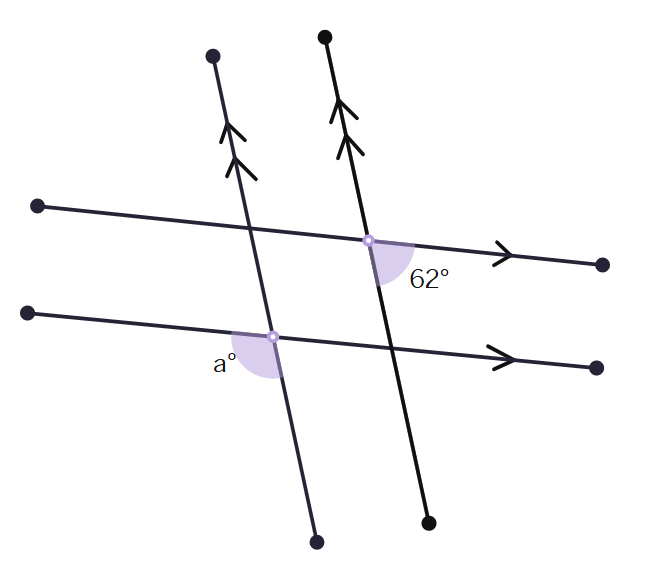
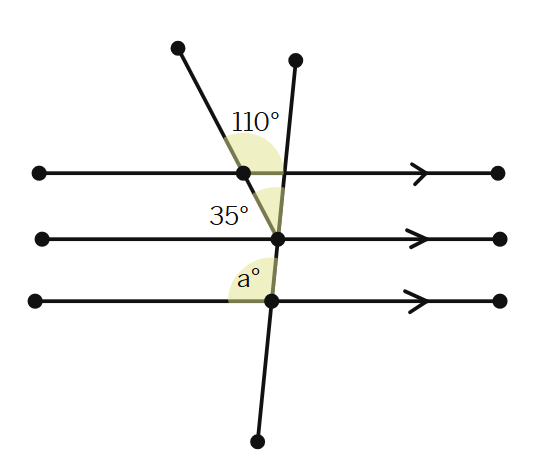
2. Find the angle represented by a:
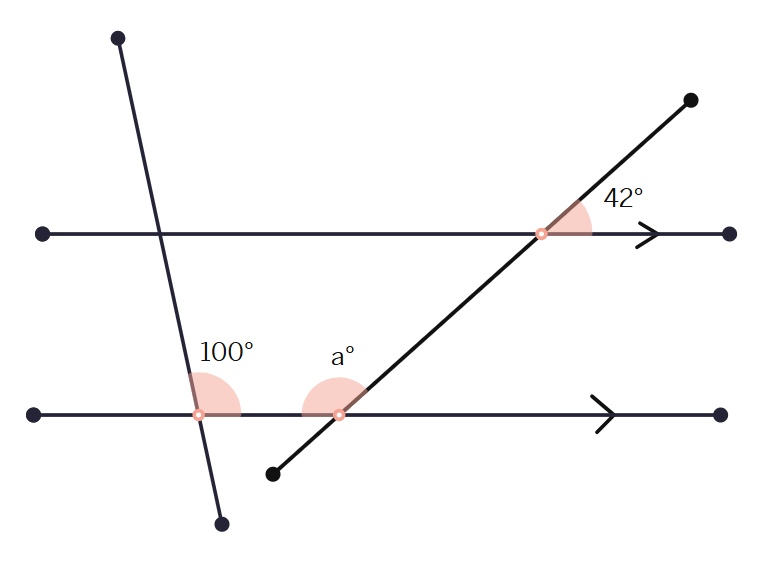
a = ° as it is to the given angle.
a = ° as it is to the angles given in the figure.
a = ° as it is to the given angle.

3. In the figures below, what angles do x and y stand for?
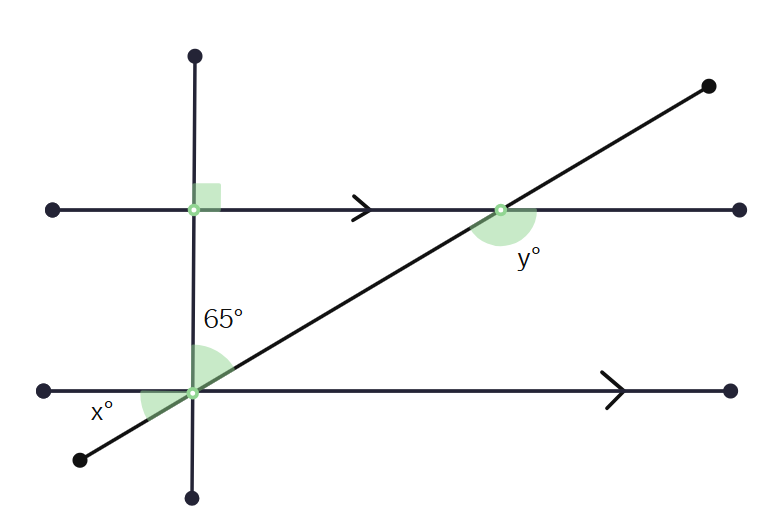
(i) Finding x: Since, the given angle and x are on a line, we have: x + ° + 65° = ° ⇒ x = °
Finding y: y is an interior angle to the same angle to x. Thus, y = ° + ° = °
(ii) Finding x: x = ° as from the figure we can see that x is a part of the angle which is to the two given angles.
From the figure we can see that, the two given angles need to be .

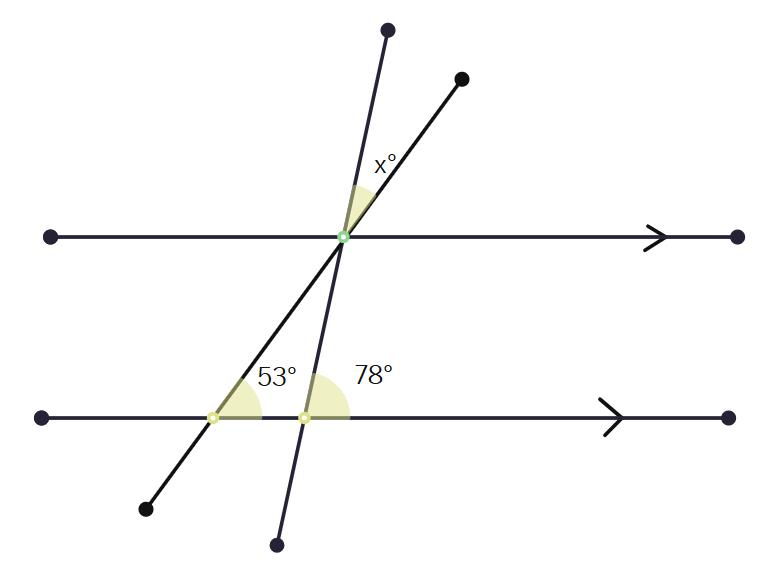
4. In the figure, ∠ABC = 45° and ∠IKJ = 78°. Find angles ∠GEH, ∠HEF, ∠FED
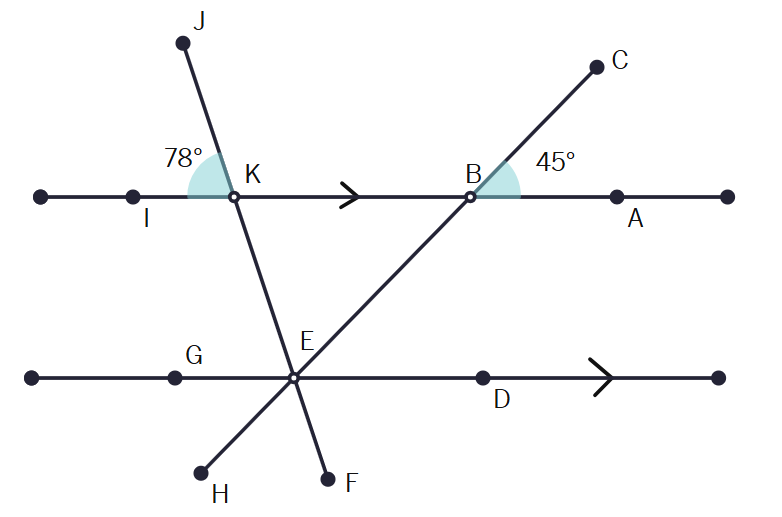
Given: ∠ABC = 45°, ∠IKJ = 78°. The two horizontal lines are parallel.
Finding ∠GEH: ∠ = ° - ° = ° ( to ∠IKJ)
Thus, ∠GEH = ° ( angles with ∠JKB)
Finding ∠HEF: ∠ = ° ( angles with ∠ABC)
∠HEF = ° ( to ∠BED)
Finding ∠FED: ∠FED = ° - ° = ° ( to ∠BED)
Answers: ∠GEH = 102°; ∠HEF = 45°; ∠FED = 135°

5. In the figure, AB is parallel to CD and CD is parallel to EF. Also, EA is perpendicular to AB. If ∠BEF = 55°, find the values of x and y.
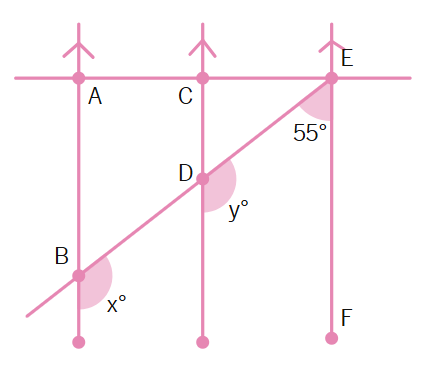
Given: AB ∥ CD ∥ EF (all three lines are parallel); EA ⊥ AB; ∠BEF = 55°
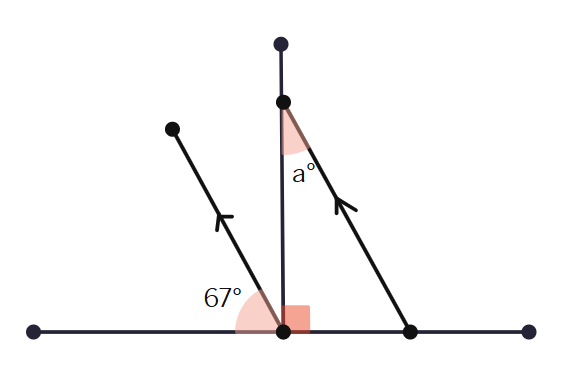
Finding x: Since EA ⊥ AB, we have ∠EAB = °
In triangle formed, ∠ABD + ∠BEF + ∠EAB must relate through parallel lines. Since AB ∥ CD, and BD is a
∠ABD and x° are angles
∠ABD = ° - ° = °
x = 35°
Finding y: Since CD ∥ EF, and is a transversal.
∠CDE and ∠DEF are alternate interior angles with ∠DEF = °
y° and ∠CDE are on line CD.
y° = ° - ° = °
Thus, x = 35° and y = 125°.

6. What is the measure of angle ∠NOP in the figure?
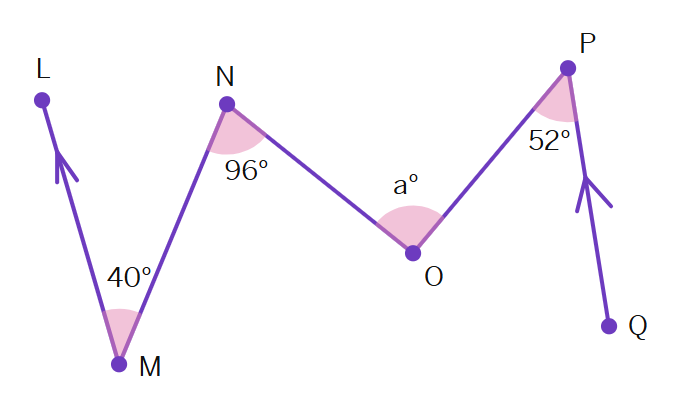
[Hint: Draw lines parallel to LM and PQ through points N and O.]

Given: ∠LMN = 40°; ∠MNO = 96°; ∠OPQ = 52° and LM ∥ PQ
Draw parallel lines through N and O.
At point N: ∠MNO = 96° (given). Since the line through N is parallel to LM, using angles: The angle on the left side of N = ° (alternate to ∠)
The angle on the right side of N = ° - ° = °
At point O: Since the line through O is parallel to PQ, using angles: The angle on the right side of O = ° (alternate to ∠)
Therefore: a° = 56° + 52° = °