

Introduction
Understanding Classification and Organization
When describing a person, we often highlight their unique traits and accomplishments. Here are some examples:
Ramanujan was a brilliant mathematician known for his work in number theory.
Dasarathi was a renowned Telugu poet and also a freedom fighter.
Albert Einstein, originally from Germany, was a physicist who had a passion for music.
Maryam Mirzakhani was a mathematician and the only woman to win the prestigious Fields Medal.
In various fields, classification helps in better understanding and organization:
Science: Elements are grouped based on their properties.
Academics: Books are categorized by subjects for easy reference.
Mathematics: Topics are divided into different chapters to aid learning.
Human teeth are classified into
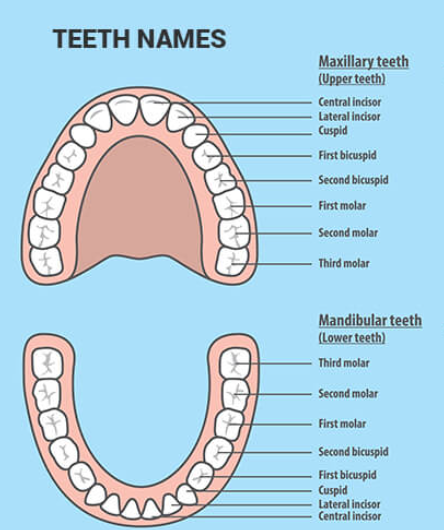
1. Incisors – Used for cutting food.
2. Canines – Help in tearing food.
3. Premolars – Assist in grinding food.
4. Molars – Also used for grinding and chewing.
Each quadrant of the mouth follows the dental formula: 2, 1, 2,
where the numbers represent incisors, canines, premolars, and molars, respectively.
Just like in science, numbers are also categorized for better understanding:
Natural Numbers (N): 1, 2, 3, 4,...
Whole Numbers (W): 0, 1, 2, 3, 4, ... (includes zero)
Integers (Z): ..., -3, -2, -1, 0, 1, 2, 3, ...(includes positive and negative numbers)
Rational Numbers (Q): Numbers that can be written as a fraction
p q Real Numbers (R): All numbers, including those with decimal expansions.
By organizing numbers into these groups, mathematical operations and problem-solving become more efficient and systematic.